X-Rays: 5 Essential Diagnostic Uses And Safety Tips
Understanding X-rays: How they work, when they're used, and what to expect during imaging.
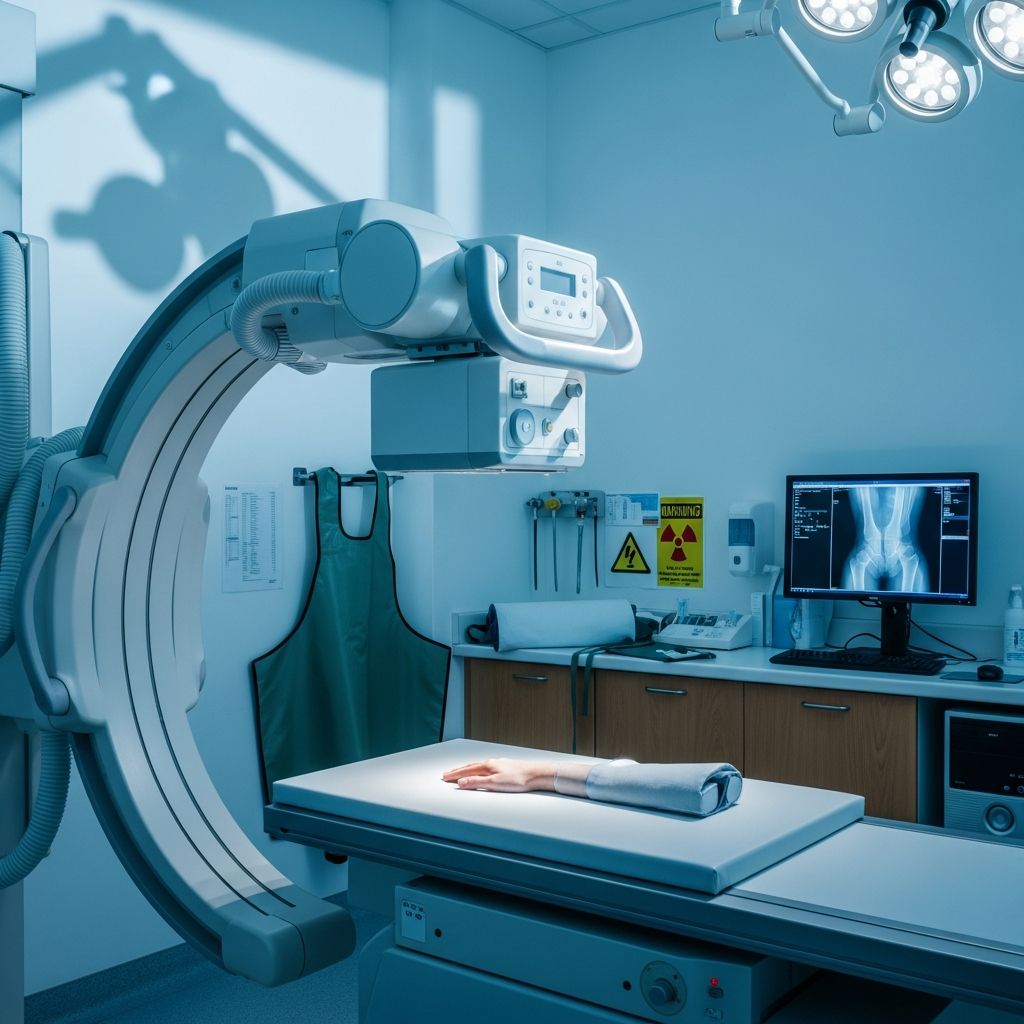
Understanding X-Rays: A Fundamental Diagnostic Tool
X-rays represent one of the most widely used and valuable diagnostic imaging technologies in modern medicine. Since their discovery over a century ago, X-rays have revolutionized the way healthcare professionals visualize internal structures of the human body, enabling early detection of diseases, monitoring of treatment progress, and guidance during surgical procedures. This diagnostic imaging technique uses electromagnetic radiation to create detailed images of bones, organs, and tissues, providing clinicians with essential information for patient care and treatment planning.
What Are X-Rays?
X-rays are a form of electromagnetic radiation with wavelengths shorter than visible light but longer than gamma rays. When X-rays pass through the body, different tissues absorb varying amounts of radiation based on their density and composition. Bones, being denser, absorb more X-rays and appear white on the image, while soft tissues appear in shades of gray, and air-filled spaces like the lungs appear dark or black. This differential absorption creates a two-dimensional picture that allows radiologists and physicians to identify structural abnormalities, fractures, infections, and other pathological conditions.
How X-Ray Imaging Works
The X-ray process begins when electrons are fired at a metal target, typically made of tungsten, within a vacuum tube. This collision produces X-ray photons that are directed toward the patient. Modern X-ray equipment includes sophisticated filtration and collimation systems that shape and direct the radiation beam to the specific area of interest, minimizing exposure to surrounding tissues. Digital detectors capture the X-rays that pass through the body, converting them into electronic signals that are processed into detailed images. Advanced technologies now allow for real-time imaging, three-dimensional reconstruction, and enhanced image quality with lower radiation doses.
Medical Applications of X-Ray Imaging
Bone and Skeletal Assessment
X-rays excel at imaging the skeletal system, making them the first-line imaging modality for suspected fractures, dislocations, and bone deformities. Orthopedic surgeons use X-rays to assess bone alignment, guide reduction procedures, and monitor healing progress. Radiographs of the spine help evaluate spinal curvature abnormalities such as scoliosis, and enable assessment of degenerative disc disease and vertebral compression fractures. The ability to re-examine the alignment and motion of the spine is integral to treatment planning and recovery monitoring.
Chest Imaging
Chest X-rays remain the most frequently performed radiographic examination worldwide. They effectively visualize the lungs, heart, mediastinum, and chest wall, allowing detection of pneumonia, tuberculosis, lung nodules, pleural effusions, and cardiac abnormalities. Portable chest radiographs provide rapid assessment in emergency departments and intensive care units, where mobility and speed are critical.
Abdominal and Gastrointestinal Imaging
X-rays of the abdomen can identify free air indicating perforation, bowel obstruction patterns, and certain types of kidney stones. With the addition of contrast agents, X-ray fluoroscopy enables visualization of the gastrointestinal tract, including the esophagus, stomach, small intestine, and colon, helping diagnose ulcers, strictures, malabsorption disorders, and tumor locations.
Dental Radiography
Intraoral and panoramic dental X-rays provide detailed images of teeth, jawbones, and supporting structures. These images are essential for detecting cavities, assessing bone loss in periodontal disease, evaluating impacted teeth, and planning orthodontic or surgical interventions.
Emergent and Critical Care
Portable X-ray equipment enables rapid imaging of critically ill patients without moving them from life support systems. This capability is invaluable in emergency departments, trauma centers, and intensive care units where immediate assessment can be lifesaving.
Related Stories



Emerging Advanced X-Ray Technologies
X-Ray Differential Phase-Contrast Imaging
Innovative research at leading medical institutions has developed X-ray differential phase-contrast technology, which uses the phase change of X-rays to create images with both exceptional spatial resolution and superior soft-tissue contrast. This advancement combines the strengths of traditional X-rays with the tissue discrimination capabilities previously limited to MRI and ultrasound. The technology shows particular promise for high-accuracy mammography and whole-body radiography, enabling healthcare professionals to differentiate between arterial walls, low-density lipid deposits, and fibrosis or calcified plaque capsules. Beyond medical applications, this technology has potential uses in security screening for luggage inspection and industrial quality control.
Voice-Controlled X-Ray Systems
Cutting-edge developments in surgical imaging have introduced voice-controlled AI systems that enable hands-free operation of robotic X-ray equipment during procedures. These systems use advanced speech recognition and large language models to translate surgeon commands into robotic imaging instructions. By creating and updating a three-dimensional digital twin of the patient from previous imaging data, these systems can autonomously position imaging equipment, reducing the need for repeated X-ray exposures and thereby minimizing cumulative radiation exposure to patients and surgical staff. Testing has demonstrated an 84% success rate in achieving desired imaging views through voice commands alone.
The X-Ray Procedure: What to Expect
Before Your X-Ray
Prior to an X-ray examination, patients typically receive instructions regarding metal removal, as metal objects can create artifacts that degrade image quality. Women of childbearing age may be asked about pregnancy status, as special precautions apply to pregnant patients. Healthcare providers will review the indication for imaging and explain the procedure to alleviate anxiety.
During the Examination
During the X-ray procedure, patients are positioned to optimally visualize the area of interest. A radiologic technologist ensures proper positioning and may use positioning aids or ask the patient to hold specific postures. The technologist then steps behind protective shielding while the X-ray exposure occurs, which typically lasts only milliseconds. Modern equipment allows for real-time monitoring of image quality, and additional views may be obtained if needed for complete diagnostic assessment.
After Your X-Ray
X-ray examinations require no recovery period. Patients can immediately return to normal activities. A radiologist interprets the images and generates a detailed report that is communicated to the ordering physician, typically within hours to days depending on urgency.
Safety and Radiation Exposure
Radiation Dose Considerations
X-ray procedures expose patients to ionizing radiation, and healthcare providers follow the principle of ALARA—As Low As Reasonably Achievable—to minimize exposure. A single chest X-ray delivers approximately 0.1 millisieverts (mSv) of radiation, while more complex procedures such as computed tomography (CT) scans deliver higher doses. Modern digital X-ray systems use significantly less radiation than older film-based systems, reducing patient exposure by up to 50% while simultaneously improving image quality.
Protective Measures
Radiologic technologists and physicians employ multiple strategies to reduce unnecessary radiation exposure. These include using lead aprons and thyroid shields for patients when the shielded area is not part of the examination, employing pulsed fluoroscopy rather than continuous fluoroscopy when possible, and maintaining appropriate distance from the X-ray source. Careful collimation ensures that the X-ray beam illuminates only the region of diagnostic interest.
Risk-Benefit Analysis
The radiation risk from X-ray examinations must be weighed against the diagnostic benefit. For most clinical situations, the value of obtaining diagnostic information far outweighs the minimal risk from radiation exposure. Radiologists and ordering physicians carefully consider clinical indications to avoid unnecessary imaging while ensuring that medically necessary examinations are not delayed or withheld due to unfounded radiation concerns.
Comparing X-Rays to Other Imaging Modalities
| Imaging Modality | Radiation Exposure | Soft Tissue Visualization | Bone Detail | Cost | Availability |
|---|---|---|---|---|---|
| X-Ray | Low | Limited | Excellent | Low | Widely Available |
| CT Scan | Moderate-High | Good | Excellent | Moderate-High | Widely Available |
| MRI | None | Excellent | Good | High | Available |
| Ultrasound | None | Good | Poor | Low | Widely Available |
| Nuclear Medicine | Low-Moderate | Limited | Limited | Moderate | Available |
Special Considerations and Contraindications
Pregnancy
While radiation exposure from X-rays poses minimal risk to the fetus, pregnant patients generally have X-rays deferred unless the clinical situation is urgent. When imaging is medically necessary, lead shielding of the abdomen and pelvis is used to minimize fetal exposure. The risk of fetal harm from diagnostic X-rays is considered negligible when proper shielding is employed.
Pediatric Patients
Children undergoing X-ray examinations receive special consideration due to their greater radiosensitivity and longer life expectancy. Radiologic technologists use reduced exposure parameters and precise collimation to minimize doses in pediatric patients while maintaining diagnostic image quality.
Contrast Agents
Some X-ray procedures employ contrast agents containing barium or iodine to enhance visualization of specific structures. Patients with iodine allergies require special precautions or alternative imaging modalities when iodinated contrast is under consideration.
Clinical Applications and Outcomes
Fracture Detection and Management
X-rays remain the gold standard for initial fracture assessment. Emergency departments rely heavily on radiographs for rapid diagnosis, and orthopedic surgeons use serial X-rays to monitor healing and alignment throughout the treatment course.
Infection and Inflammation Assessment
Chest X-rays effectively identify pneumonia, tuberculosis, and other pulmonary infections. X-rays of joints can reveal signs of inflammatory arthritis, with specific imaging patterns helping guide diagnosis and treatment decisions for rheumatologic conditions.
Cancer Surveillance
Chest X-rays serve as a screening tool for lung cancer in high-risk populations and are used for surveillance in cancer patients to detect pulmonary metastases or recurrence.
Frequently Asked Questions About X-Rays
Q: How much radiation does a standard X-ray expose me to?
A: A standard chest X-ray delivers approximately 0.1 millisieverts of radiation, which is considered a low dose. This is significantly less than the annual background radiation most people receive from natural sources in the environment.
Q: Is it safe to have X-rays taken during pregnancy?
A: When medically necessary, X-rays can be safely performed during pregnancy with appropriate abdominal and pelvic shielding. The diagnostic benefit typically outweighs the minimal radiation risk to the fetus in urgent clinical situations.
Q: How quickly will I receive my X-ray results?
A: Non-urgent X-ray results are typically available within 24-48 hours. Emergency radiographs are interpreted immediately by the radiologist and results communicated to the ordering physician urgently.
Q: Can I refuse specific X-ray projections if I’m uncomfortable?
A: While additional projections can sometimes be obtained, certain views may be necessary for complete diagnostic assessment. Communicate any discomfort or concerns to the radiologic technologist, who can work with you to obtain diagnostic images while minimizing patient discomfort when possible.
Q: Are there any foods or medications I need to avoid before an X-ray?
A: Most X-ray procedures require no special preparation. However, some contrast-enhanced studies may require fasting. Your healthcare provider will give you specific instructions based on the type of X-ray you’re having.
Q: How does digital X-ray differ from traditional film X-ray?
A: Digital X-rays use electronic detectors instead of photographic film, providing superior image quality, lower radiation doses, immediate image availability, and easier image storage and sharing compared to traditional film radiography.
Q: Can X-rays detect all types of diseases?
A: X-rays excel at visualizing bone and detecting certain thoracic and abdominal conditions, but have limitations in soft tissue visualization. Other imaging modalities like MRI or ultrasound may be more appropriate for certain clinical questions.
References
- Hot Technologies: X-Rays, Solar Cells and a Selective Approach to Cancer Therapy — Johns Hopkins University. 2024. https://ventures.jhu.edu/news/hot-technologies-x-rays-solar-cells-cancer-therapy/
- Speak and Your X-Ray Will Be Imaged — Johns Hopkins Malone Center. June 2025. https://malonecenter.jhu.edu/speak-and-your-x-ray-will-be-imaged/
Similar Articles








Read full bio of medha deb