Xanthelasma: Eyelid Cholesterol Deposits
Discover the causes, risks, and effective treatments for xanthelasma, the yellowish cholesterol buildup around your eyelids that signals potential health issues.
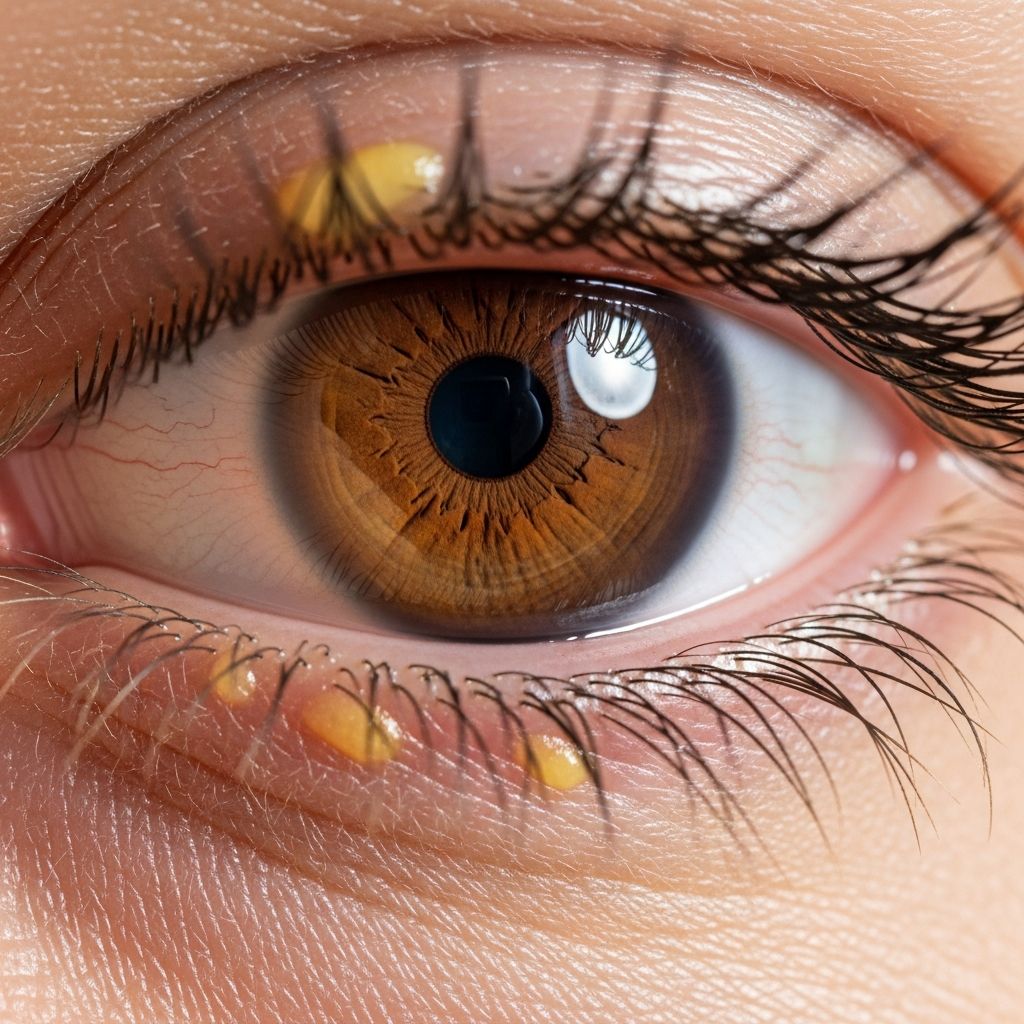
Xanthelasma palpebrarum refers to benign, yellowish growths composed of cholesterol that appear on or near the eyelids, most often on the inner upper lids. These soft plaques are the most common type of xanthoma around the eyes and primarily concern patients due to their appearance, though they can indicate underlying metabolic issues.
Recognizing the Signs of Xanthelasma
The hallmark feature of xanthelasma is its distinctive yellow coloration, arising from lipid accumulation in the skin. Lesions typically emerge as flat or slightly raised patches, often bilateral and symmetric, favoring the medial canthus of the upper eyelid. Over time, they may thicken or spread, creating a bumpy texture that contrasts sharply with surrounding skin.
- Color: Soft, pale yellow to deeper orange hues.
- Shape: Oval or irregular plaques with well-defined edges.
- Location: Predominantly upper eyelids (70-80% of cases), occasionally lower lids.
- Size: Starting small (2-5 mm), potentially growing to 2-3 cm if untreated.
- Symptoms: Asymptomatic—no pain, itching, or vision impact—but cosmetic distress is common.
In advanced cases, larger deposits might contribute to mild eyelid drooping (ptosis), altering facial aesthetics further.
Who Is at Risk for Developing Xanthelasma?
This condition peaks between ages 30-50, affecting women more frequently (incidence ~1.2%) than men (~0.3%). Certain ethnic groups, including those of Asian or Mediterranean descent, show higher prevalence.
| Risk Factor | Prevalence Impact | Associated Conditions |
|---|---|---|
| Age 35-60 | Most common | Middle-aged adults |
| Female gender | 2-4x higher | Hormonal influences? |
| High cholesterol | 50% of cases | Hyperlipidemia types II/IV |
| Family history | Increased | Familial hypercholesterolemia |
| Obesity/Diabetes | Moderate | Metabolic syndrome |
Notably, up to 50-70% of individuals have normal lipid profiles at diagnosis, highlighting other contributing factors like genetics or local skin changes.
Root Causes and Biological Mechanisms
Xanthelasma stems from cholesterol and lipid leakage into eyelid skin, where macrophages engulf these fats, transforming into foam cells that form visible plaques. Key triggers include:
- Lipid Imbalances: Elevated LDL, triglycerides, or reduced HDL impairs cholesterol clearance.
- Capillary Leakage: Eyelid skin’s thinness and frequent motion (blinking) promote lipid extravasation.
- Inflammation: Local macrophage activation and peroxidation of LDL accelerate foam cell buildup.
- Systemic Links: Conditions like diabetes, hypothyroidism, liver disease (e.g., primary biliary cholangitis), or pancreatitis disrupt lipid metabolism.
Even without hyperlipidemia, genetic predispositions or protein abnormalities in lipoproteins can drive deposits.
Health Implications Beyond Appearance
While harmless locally, xanthelasma flags cardiovascular vulnerability. Studies link it to atherosclerosis, with plaque signaling arterial buildup that risks heart attacks or strokes. About half of patients warrant lipid screening to avert serious events.
Associated disorders include:
- Type II/IV hyperlipidemias (high cholesterol/triglycerides).
- Familial hypercholesterolemia (inherited high LDL).
- Thyroid dysfunction or metabolic syndrome.
- Rarely, cancers or pancreatic inflammation.
How Professionals Diagnose Xanthelasma
Diagnosis is straightforward via clinical exam—no imaging needed. Yellow plaques at the medial eyelids confirm it in most cases.
However, providers recommend:
Related Stories



- Blood Tests: Full lipid panel (cholesterol, HDL, LDL, triglycerides), fasting glucose, thyroid function.
- Biopsy (Rare): If atypical, reveals foam cells in reticular dermis—lipid vacuoles in macrophages, sparing epidermis.
- History Review: Family lipids, diet, comorbidities.
Differentiating from Similar Eyelid Lesions
Several conditions mimic xanthelasma:
| Condition | Key Features | Distinguishing Traits |
|---|---|---|
| Necrobiotic Xanthogranuloma | Yellowish periorbital plaques | Associated with myeloma; deeper inflammation |
| Syringoma | Small papules in women | Firmer, multiple tiny bumps; eccrine origin |
| Diffuse Plane Normolipemic Xanthoma | Widespread yellowing | Normolipemic; larger areas |
| Basal Cell Carcinoma | Pearly nodule | Ulceration, telangiectasia; malignant |
Treatment Options for Removal and Management
Treatment targets cosmetics and underlying lipids. No cure exists; recurrence hits 13-60%.
Lifestyle and Medical Management
- Low-fat diet, exercise, statins for hyperlipidemia—may slow progression but rarely resolves lesions.
Definitive Removal Techniques
Surgical Excision: Sharp removal under local anesthesia; effective but risks scarring, ectropion (10-20%), recurrence. Grafts for large lesions.
Laser Ablation: CO2, Er:YAG, or pulsed dye lasers vaporize foam cells. Pros: Precise, minimal bleeding. Cons: Pigment changes, burns (rare), 13-16% recurrence.
Cryotherapy: Freezing destroys tissue; avoided on eyelids due to swelling/blister risk.
Chemical Peels/TCA: Trichloroacetic acid peels layers off; good for superficial plaques, multiple sessions needed.
Radiofrequency: Heat-based ablation; low scarring, quick recovery.
| Method | Success Rate | Recurrence | Side Effects |
|---|---|---|---|
| Surgery | 90-95% | 20-40% | Scarring, ectropion |
| Laser | 85-95% | 13-16% | Pigmentation, burns |
| Cryo/Peel | 70-85% | 30-50% | Swelling, hypopigmentation |
Preventing Recurrence and Monitoring Progress
Post-treatment, maintain lipid control via meds/diet. Annual bloodwork tracks cholesterol. Early intervention on risk factors (weight loss, smoking cessation) reduces new lesions.
Common Questions About Xanthelasma
FAQ
Is xanthelasma dangerous?
No, it’s benign, but check lipids for heart risks.
Can diet alone remove it?
Rarely; addresses cause but not visible plaque.
How quick is laser recovery?
1-2 weeks; redness fades in days.
Does it affect vision?
Not directly, unless massive size causes ptosis.
Is it hereditary?
Often linked to familial hyperlipidemia.
Living with Xanthelasma: Practical Advice
Embrace camouflage makeup for mild cases while pursuing treatment. Consult ophthalmologists or dermatologists specializing in oculoplastics. Regular heart health checkups are crucial, as these spots may precede detectable vascular disease.
Emerging therapies like topical cholestyramine show promise in small studies, but lasers/surgery remain gold standards. Patient education empowers proactive management.
References
- Xanthelasma Palpebrarum (XP) — EyeWiki (American Academy of Ophthalmology). 2023-10-15. https://eyewiki.org/Xanthelasma
- Xanthelasma — Idaho Eyelid and Face. 2024-01-20. https://www.idahoeyelidandface.com/reconstructive-procedures-boise-idaho/skin-tumors/xanthelesama/
- Xanthoma — MedlinePlus (U.S. National Library of Medicine). 2023-05-01. https://medlineplus.gov/ency/article/001447.htm
- Xanthelasma — Peak Skin Center. 2024-02-10. https://www.peakskincenter.com/cosmetic-dermatology/xanthelasma-cary-nc/
- Xanthelasma: Causes, Symptoms, Treatment — WebMD. 2023-11-12. https://www.webmd.com/eye-health/xanthelasma
- Xanthelasma — Cleveland Clinic. 2024-03-05. https://my.clevelandclinic.org/health/diseases/23385-xanthelasma
Similar Articles








Read full bio of medha deb