Xanthoma: 7 Common Types, Causes And Treatments
Understanding xanthomas: Skin lesions from lipid deposits signaling underlying dyslipidaemias and systemic risks.
A
xanthelasma
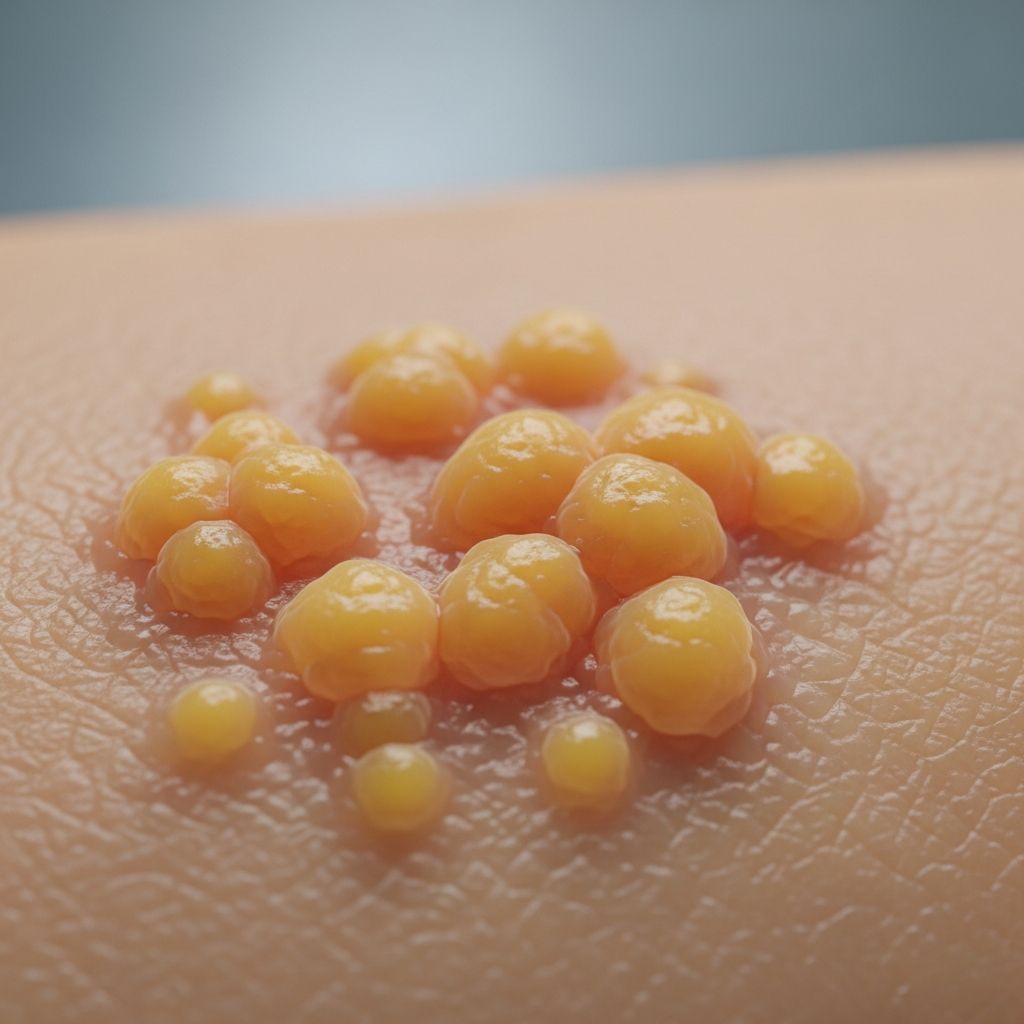
is a skin lesion resulting from the accumulation of lipids, primarily cholesterol, within macrophages in the dermis or occasionally subcutaneous tissue. These deposits manifest as yellowish plaques or nodules, often indicating underlyingdyslipidaemia
—abnormal blood lipid levels—that requires medical evaluation to prevent complications like cardiovascular disease.Introduction
Xanthomas represent a diverse group of cutaneous disorders characterised by the deposition of lipids in histiocytes (macrophages) within the skin. While generally benign, they serve as visible markers of metabolic disturbances, particularly
hyperlipidaemias
, urging prompt investigation into systemic health. The term ‘xanthoma’ derives from Greek, meaning ‘yellow tumour’, reflecting their typical colouration due to cholesterol esters.These lesions vary in morphology, location, and aetiology, but all share a common pathogenesis involving foam cell formation—lipid-laden macrophages. Recognition is crucial as xanthomas correlate with elevated risks of atherosclerosis, pancreatitis, and other sequelae of lipid disorders.
Demographics
Xanthomas affect individuals across ages but show patterns tied to their subtypes.
Xanthelasma palpebrarum
, the most prevalent type, occurs in 1-2% of adults, peaking in middle age (40-60 years), with no strong gender bias though slightly more common in women. Familial hypercholesterolaemia-related tendon xanthomas manifest in younger patients, often teens or 20s in homozygous forms.Eruptive xanthomas arise in contexts of acute hypertriglyceridaemia, frequently in adults with uncontrolled diabetes or alcoholism. Rare forms like verruciform xanthoma appear across ages, often linked to chronic irritation sites such as the oral mucosa. Prevalence is higher in populations with genetic predispositions to dyslipidaemias, such as those of European descent for familial hypercholesterolaemia.
Causes
Xanthomas stem primarily from
dyslipidaemias
, classified as primary (genetic) or secondary (acquired). Primary forms include:- Familial hypercholesterolaemia (FH): Mutations in LDLR, APOB, or PCSK9 genes cause elevated LDL-cholesterol, leading to tendon and tuberous xanthomas.
- Familial dysbetalipoproteinaemia (Type III hyperlipoproteinaemia): APOE gene defect results in cholesterol-rich remnant accumulation, causing palmar and tuberous xanthomas.
- Familial hypertriglyceridaemia: Linked to eruptive xanthomas.
- Cerebrotendinous xanthomatosis and sitosterolaemia: Rare metabolic defects mimicking FH.
Secondary dyslipidaemias encompass:
- Uncontrolled diabetes mellitus
- Hypothyroidism
- Nephrotic syndrome
- Cholestatic liver disease
- Drugs (e.g., retinoids, oestrogens, corticosteroids)
- Alcohol excess and obesity.
Diffuse plane xanthomatosis associates with paraproteinaemia (e.g., multiple myeloma), while xanthoma disseminatum is a non-lipid-related histiocytosis. Verruciform xanthoma arises from local keratinocyte lipid debris, independent of systemic dyslipidaemia.
Clinical features
Xanthomas are categorised by presentation:
Xanthelasma
The commonest, presenting as soft, yellowish plaques on the eyelids, especially medial upper lids. They are asymptomatic, bilateral, and progressive, affecting 50% of FH patients. Even normolipaemic cases (50%) warrant lipid screening.
Plane xanthomas
Yellow macules/patches anywhere, notably interdigital in homozygous FH (pathognomonic). Associated with Type III hyperlipoproteinaemia.
Palmar xanthoma
Yellow-orange creases on palms/wrists, diagnostic for Type III dyslipoproteinaemia.
Tuberous xanthomas
Firm red-yellow nodules over knees, elbows, buttocks; coalesce into masses. Linked to hypercholesterolaemia.
Tendon xanthomas
Subcutaneous nodules on Achilles/extensor tendons; firm, mobile. Hallmark of FH.
Eruptive xanthomas
Sudden crops of 2-5mm yellow papules with red halos on extensors, buttocks; pruritic/tender. Triggered by triglycerides >11 mmol/L.
Verruciform xanthoma
Warty plaques on mucosa/genitalia; reactive, not dyslipidaemic.
Images typically show yellow-orange hues; e.g., eyelid plaques for xanthelasma, palmar creases, tendon swellings.
Complications
Xanthomas signal serious risks: cardiovascular disease (CVD) from atherosclerosis in FH (50-fold MI risk in homozygotes), pancreatitis from severe hypertriglyceridaemia. Xanthelasma independently predicts ischaemic heart disease. Cosmetic distress and rare ulceration occur. Untreated dyslipidaemias accelerate morbidity/mortality.
Related Stories



Diagnosis
Often clinical in dyslipidaemia context. Biopsy reveals dermal foam cells (lipid-laden histiocytes), confirmed by Oil Red O stain. Touton giant cells may appear. Investigations include:
- Fasting lipid profile (cholesterol, triglycerides, LDL/HDL)
- Lipoprotein electrophoresis
- Blood glucose, thyroid function, liver/renal tests
- Genetic testing for FH (e.g., LDLR mutations)
- Slit-lamp for corneal arcus.
Differential diagnoses
| Condition | Key Distinguishers |
|---|---|
| Other yellow lesions (e.g., keratoacanthoma) | Central keratin plug, rapid growth |
| Pseudoxanthoma elasticum | Yellow papules in skin folds, angioid streaks |
| Granulomas/lipomas | Histology lacks foam cells |
| Sebaceous hyperplasia | Central dell, oily |
| Molluscum/syringomas | Umbilication, beading |
Correlate clinically/serologically.
Treatment
Target underlying dyslipidaemia: statins/PCSK9 inhibitors for hypercholesterolaemia, fibrates/omega-3 for triglycerides, lifestyle (low-fat diet, exercise, diabetes control). Lesions often regress: eruptive/tuberous resolve rapidly, xanthelasma variably.
Cosmetic options:
- Trichloroacetic acid peels
- Cryotherapy, electrodessication
- Lasers (CO2, Er:YAG, Nd:YAG)
- Excision (risks scarring/recurrence).
Verruciform: surgical excision.
Outcome
Prognosis ties to dyslipidaemia management. Effective treatment prevents CVD/pancreatitis; xanthomas regress but may recur if lipids uncontrolled. Xanthelasma recurs post-ablation in 40%. Multidisciplinary care (dermatology, lipidology, cardiology) optimises outcomes.
Frequently Asked Questions (FAQs)
Q: Are xanthomas dangerous?
A: Not directly, but they indicate dyslipidaemias raising CVD/pancreatitis risks. Seek lipid testing.
Q: Can xanthomas be prevented?
A: Manage lipids via diet, exercise, meds; screen families for FH.
Q: Do eruptive xanthomas hurt?
A: Often pruritic/tender; resolve with triglyceride control.
Q: Is xanthelasma always linked to high cholesterol?
A: In 50% cases; still check lipids/CVD risk.
Q: How to remove xanthelasma?
A: Treat lipids first; else peels, lasers, surgery.
References
- Xanthomas — DermNet NZ. 2023. https://dermnetnz.org/topics/xanthoma
- Eruptive xanthoma pathology — DermNet NZ. 2023. https://dermnetnz.org/topics/eruptive-xanthoma-pathology
- Xanthelasma — Patient.info. 2024-01-15. https://patient.info/doctor/dermatology/xanthelasma
- Eruptive xanthomas: Definition, symptoms, treatment, and more — Medical News Today. 2023-11-20. https://www.medicalnewstoday.com/articles/eruptive-xanthomas
- Pseudoxanthoma Elasticum (PXE) — DermNet NZ. 2023. https://dermnetnz.org/topics/pseudoxanthoma-elasticum
Similar Articles








Read full bio of medha deb