Yam Vs Sweet Potato: Nutrition, Taste, & Health Benefits Guide
Uncover the key differences between yams and sweet potatoes in nutrition, health benefits, taste, and usage to make informed dietary choices.
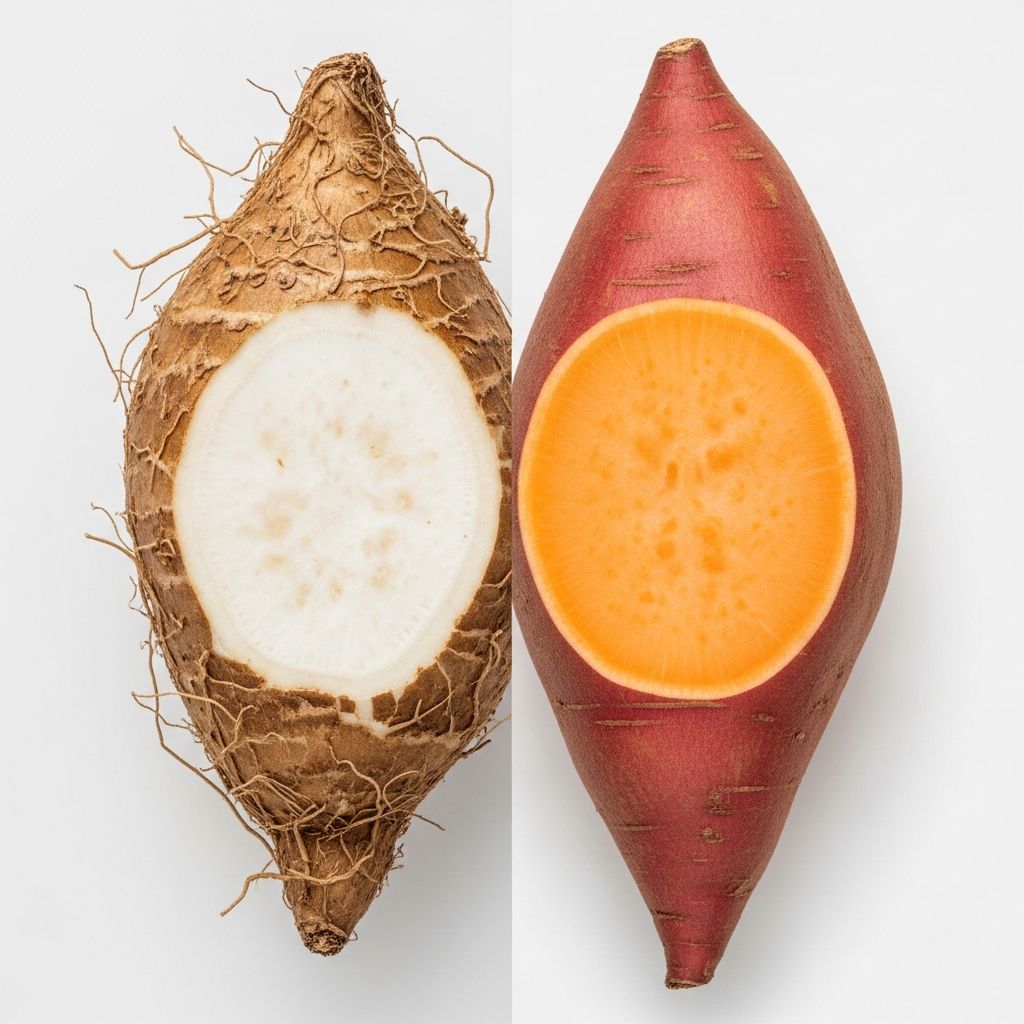
Yams and sweet potatoes are starchy root vegetables often confused in stores, but they differ botanically, nutritionally, and in culinary uses. Sweet potatoes generally offer superior vitamin content, while yams provide more fiber and lower sugar.
What Are Yams?
Yams belong to the Dioscorea genus, primarily grown in Africa and Asia, and are staple foods in many tropical regions. These tubers can grow massive, up to 100 pounds, with rough, dark brown or black bark-like skin and white, yellow, or purple flesh. Unlike sweet potatoes, true yams are rarely found in U.S. supermarkets; what’s labeled “yam” is usually a sweet potato variety.
Yams have a starchy, dry texture when cooked, with mild, earthy flavor. They require longer cooking times due to high starch content and are used in dishes like fufu, pounded yam, or fries in West African cuisine. Nutritionally, yams excel in potassium and fiber but lag in vitamins A and C compared to sweet potatoes.
What Are Sweet Potatoes?
Sweet potatoes (Ipomoea batatas) are from the morning glory family, native to Central and South America. They feature smooth skin in beige, orange, purple, or red hues, with moist, sweet flesh ranging from white to deep orange or purple. Orange-fleshed varieties are richest in beta-carotene.
These tubers contain an enzyme called amylase that converts starch to sugar, enhancing natural sweetness when cooked. Sweet potatoes are versatile in baking, mashing, frying, or as fries, and varieties like purple sweet potatoes offer anthocyanins for added antioxidants.
Nutritional Comparison
Per 100g baked (without salt), yams provide 116 calories, 27.5g carbs (higher net carbs and starch), 1.5g protein, and more fiber. Sweet potatoes have 90 calories, 20.7g carbs (more simple sugars), 2g protein, and significantly more vitamins/minerals.
| Nutrient (per 100g baked) | Yams | Sweet Potatoes |
|---|---|---|
| Calories | 116 | 90 |
| Carbs | 27.5g | 20.7g |
| Fiber | Higher | Lower |
| Protein | 1.5g | 2g |
| Vitamin A | Low | 150x more |
| Vitamin C | Lower | Higher |
| Potassium | Higher | Lower |
| Sodium | 2x lower | Higher |
Sweet potatoes dominate vitamins: 150x more vitamin A (as beta-carotene), 4x vitamin B2, and richer B1, B3, B5, B6, C, E. Yams have 3x more folate (B9) and lower insulin index (64 vs. 96), aiding blood sugar control despite similar glycemic index (~68). Minerals favor sweet potatoes (calcium, iron, magnesium, phosphorus, zinc), but yams lead in potassium.
Health Benefits of Yams
Yams support hormonal health, particularly for women, due to diosgenin—a compound convertible to progesterone in labs, though human benefits need more research. High fiber aids digestion, prevents constipation, and stabilizes blood sugar. Lower insulin index makes yams suitable for diabetes management.
Antioxidant properties combat oxidative stress, and potassium supports heart health by regulating blood pressure. Yams’ antiproliferative effects may inhibit cancer cell growth, per studies.
Health Benefits of Sweet Potatoes
Sweet potatoes shine in eye health from beta-carotene (provitamin A), preventing night blindness and macular degeneration. Antioxidants like carotenoids and anthocyanins (in purple varieties) offer anti-inflammatory, hepatoprotective, and anticancer benefits.
Related Stories



They improve cardiovascular health, neurological function, memory, and intestinal barrier integrity. Purple sweet potato extracts inhibit obesity, reduce fat accumulation, and normalize triglycerides in high-fat diet models. Higher vitamin C boosts immunity, and overall profile aids metabolic disorders.
Taste and Texture Differences
- Yams: Starchy, dry, mildly nutty/earthy; less sweet.
- Sweet Potatoes: Moist, very sweet (especially baked), creamy texture.
Orange sweet potatoes taste like pumpkin pie; purple ones are less sweet with berry notes. Cooking enhances sweet potatoes’ sugars via amylase.
Cooking and Storage Tips
Preparation: Both need peeling for yams (tough skin); sweet potatoes can be eaten skin-on. Boil, bake, roast, or fry. Yams suit stews/soups; sweet potatoes excel in pies, casseroles, fries.
- Baking: 400°F for 45-60 min; sweet potatoes sweeter.
- Boiling: Yams hold shape better.
- Storage: Cool, dark, dry place (50-60°F); avoid refrigeration to prevent starch breakdown. Sweet potatoes last 1-2 months; yams similar if undamaged.
Which Is Healthier?
No clear winner—depends on needs. Choose sweet potatoes for vitamins A/C, antioxidants, lower calories. Opt for yams for fiber, lower sugar/insulin response, potassium. Both offer anti-diabetic, antioxidant benefits; diversify intake.
Purple sweet potatoes add anthocyanins for extra anti-cancer, anti-obesity effects. Average serving: 1 cup cubed (136g yams, 200g sweet potatoes).
Frequently Asked Questions (FAQs)
Are yams and sweet potatoes the same?
No, yams (Dioscorea) are starchy African/Asian tubers; sweet potatoes (Ipomoea) are sweeter American roots. U.S. ‘yams’ are sweet potatoes.
Which has more calories?
Yams (116/100g) vs. sweet potatoes (90/100g).
Are sweet potatoes better for eyes?
Yes, due to 150x more vitamin A.
Can yams help with blood sugar?
Yes, lower insulin index (64 vs. 96).
How to cook purple sweet potatoes?
Bake or steam to preserve anthocyanins; great in smoothies, salads.
References
- Sweet potato vs Yam – Health impact and Nutrition Comparison — FoodStruct. 2023. https://foodstruct.com/nutrition-comparison-text/sweet-potato-vs-yam-raw
- Sweet potatoes compared to yams — Michigan State University Extension. 2014-10-29. https://www.canr.msu.edu/news/sweet_potatoes_compared_to_yams
- Sweet Potato Is Not Simply an Abundant Food Crop — National Institutes of Health (PMC). 2022-09-07. https://pmc.ncbi.nlm.nih.gov/articles/PMC9495970/
Similar Articles








Read full bio of Sneha Tete