Yellow Fever: Symptoms, Vaccine, Treatment
Understand yellow fever: symptoms, transmission, prevention via vaccination, and supportive treatment for this mosquito-borne viral disease.
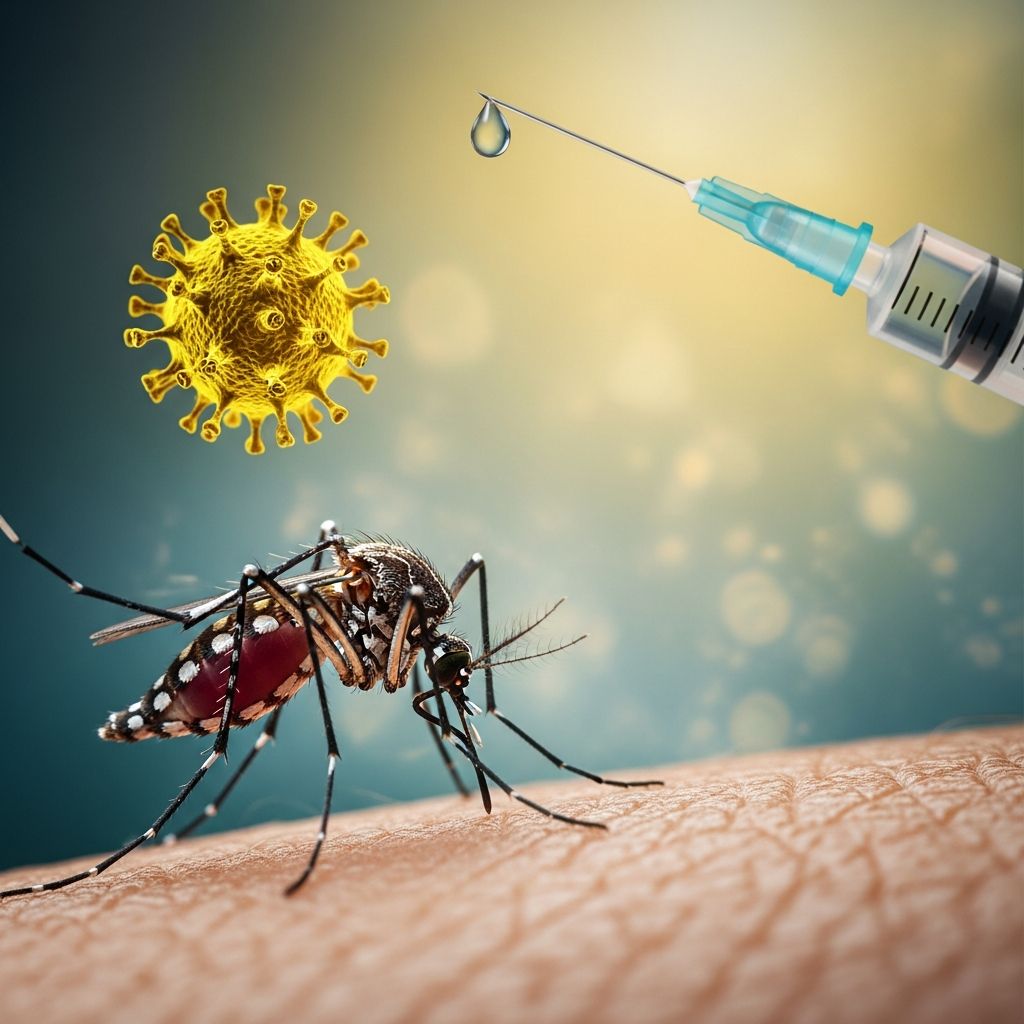
Yellow fever is a viral disease transmitted by infected mosquitoes, primarily affecting tropical regions of Africa and South America. It poses a significant global health threat due to its epidemic potential and high fatality rate in severe cases, with an estimated 31,000–82,000 deaths annually, mostly in Africa.
What Is Yellow Fever?
Yellow fever is an
epidemic-prone, vaccine-preventable disease
caused by the yellow fever virus, a flavivirus spread by the bites of infected Aedes species (like Aedes aegypti), Haemagogus, and Sabethes mosquitoes. These vectors breed in domestic, forest (sylvatic), and semi-domestic environments, facilitating three transmission cycles: urban, jungle, and intermediate. The disease earned its name from the jaundice (yellowing of skin and eyes) observed in severe cases. Globally, it threatens health security due to risks of international spread.Humans experience peak viremia (virus in the blood) shortly before fever onset and for the first 3–5 days, enabling mosquito transmission. Solid organ or bloodborne transmission is theoretically possible during this period. Most infections are asymptomatic or mild, but about 15% progress to severe illness with 30–60% fatality.
Symptoms of Yellow Fever
The
incubation period
is typically 3–6 days, ranging from 2–9 days. Initial symptoms mimic flu:fever, headache, muscle aches, nausea, vomiting, and fatigue
, lasting 3–4 days. Most recover here, but 12–15% enter a toxic phase after brief remission.Severe symptoms include recurring high fever,
jaundice
, abdominal pain, vomiting blood, bleeding from mouth/nose/eyes, and shock leading to multi-organ failure. Half of severe cases die within 7–10 days; survivors may face lifelong complications like weakness or nerve damage.- Mild phase (85% of symptomatic cases): Fever, chills, backache, prostration; resolves without intervention.
- Severe phase (15%): Jaundice, hemorrhage, liver/kidney failure; case-fatality 50%.
Causes and Transmission
The yellow fever virus is maintained in sylvatic cycles between non-human primates and forest mosquitoes, spilling over to humans via jungle cycles. Urban cycles involve human-mosquito-human transmission by Aedes aegypti. No human-to-human spread occurs without mosquitoes; fomites do not transmit it.
Endemic in 34 African and 13 South American countries, outbreaks can explode, with actual cases 10–250 times reported figures. Travelers risk exporting it to non-endemic areas.
Diagnosis of Yellow Fever
Diagnosis combines clinical history (travel to endemic areas, mosquito exposure) with lab tests. Early: virus isolation, RT-PCR for viral RNA. Later: serology (ELISA, PRNT for antibodies). By jaundice onset, virus/RNA may be undetectable, so early testing is key. Yellow fever is nationally notifiable. High-risk countries need national labs; confirmed cases trigger investigations.
Treatment for Yellow Fever
No specific antiviral exists; care is
supportive
. Rest, hydration, pain relief, and management of complications (liver/kidney failure, secondary infections via antibiotics) are standard. Severe cases require ICU hospitalization; jaundice warrants admission. Experimental antivirals like sofosbuvir or TY014 are research-only. Intensive care hasn’t reduced the 50% severe-case lethality.Related Stories



| Stage | Treatment Approach |
|---|---|
| Mild | Home rest, hydration, acetaminophen for fever |
| Severe | Hospital/ICU: fluids, electrolytes, dialysis if needed, bleeding control |
Yellow Fever Vaccine
**Vaccination is the cornerstone of prevention**. A single 0.5 mL subcutaneous dose of YF-VAX (17D strain) confers
lifelong immunity
in 99% within 30 days; no boosters needed for most. Administer 10+ days before travel. Pinkish vaccine turns pink-brown post-reconstitution.Adverse events:
- YEL-AND (neurologic): Encephalitis, Guillain-Barré; rare, mostly post-first dose (median 4 days onset).
- YEL-AVD (viscerotropic): Resembles severe disease; 1 in 200,000–400,000 doses.
Precautions: Delay in pregnancy, infancy (<6 months), egg allergy, thymus disorder. For HIV (CD4 ≥500/mL), vaccinate but test serology; boosters every 10 years if at risk.
Prevention and Control
Beyond vaccination, prevent via mosquito control: repellents (DEET), long sleeves/pants, bed nets, eliminate breeding sites. Outbreaks demand rapid detection, lab confirmation, emergency vaccination campaigns. High-risk nations maintain stockpiles; WHO prequalifies vaccines. Traveler education is vital to avoid importation.
Risk Areas and Travel Advice
Africa bears 90% burden; South America sees sylvatic cases. Check CDC/WHO maps for requirements—proof needed for entry/exit some countries. Unvaccinated travelers risk fines/detention.
Yellow Fever Outbreaks and Global Impact
Recent outbreaks underscore urgency: actual cases vastly underreported. Vaccine shortages hit during 2016–2017 Angola/D.R.C. crisis. Strengthening surveillance prevents spread.
Frequently Asked Questions (FAQs)
What are the first signs of yellow fever?
Fever, headache, body aches, nausea—appearing 3–6 days post-bite.
Is yellow fever curable?
No cure, but supportive care saves many mild cases; severe mortality ~50%.
Does the yellow fever vaccine provide lifelong protection?
Yes, one dose offers lifelong immunity for most; no routine boosters.
Who shouldn’t get the yellow fever vaccine?
Infants <6 months, pregnant women (if possible), immunocompromised without assessment.
Can yellow fever spread without mosquitoes?
No, requires infected mosquito bite; no direct human transmission.
How deadly is severe yellow fever?
30–60% fatality in hospitalized severe cases.
References
- Yellow fever — World Health Organization. 2023-10-06. https://www.who.int/news-room/fact-sheets/detail/yellow-fever
- Yellow Fever — Centers for Disease Control and Prevention (CDC). 2024-07-01. https://www.cdc.gov/yellow-book/hcp/travel-associated-infections-diseases/yellow-fever.html
- Yellow fever — NaTHNaC (UK Health Security Agency). 2024. https://travelhealthpro.org.uk/disease/194/yellow-fever
- Yellow Fever: 100 Years of Discovery — JAMA Network. 2007-06-20. https://jamanetwork.com/journals/jama/fullarticle/182442
- Yellow Fever — StatPearls, NCBI Bookshelf (NIH). 2023-08-08. https://www.ncbi.nlm.nih.gov/books/NBK470425/
Similar Articles








Read full bio of medha deb