Yellow Fever: Essential Guide To Symptoms, Diagnosis, Prevention
Comprehensive guide to yellow fever: symptoms, transmission, diagnosis, treatment, prevention, and global impact.
What is yellow fever?
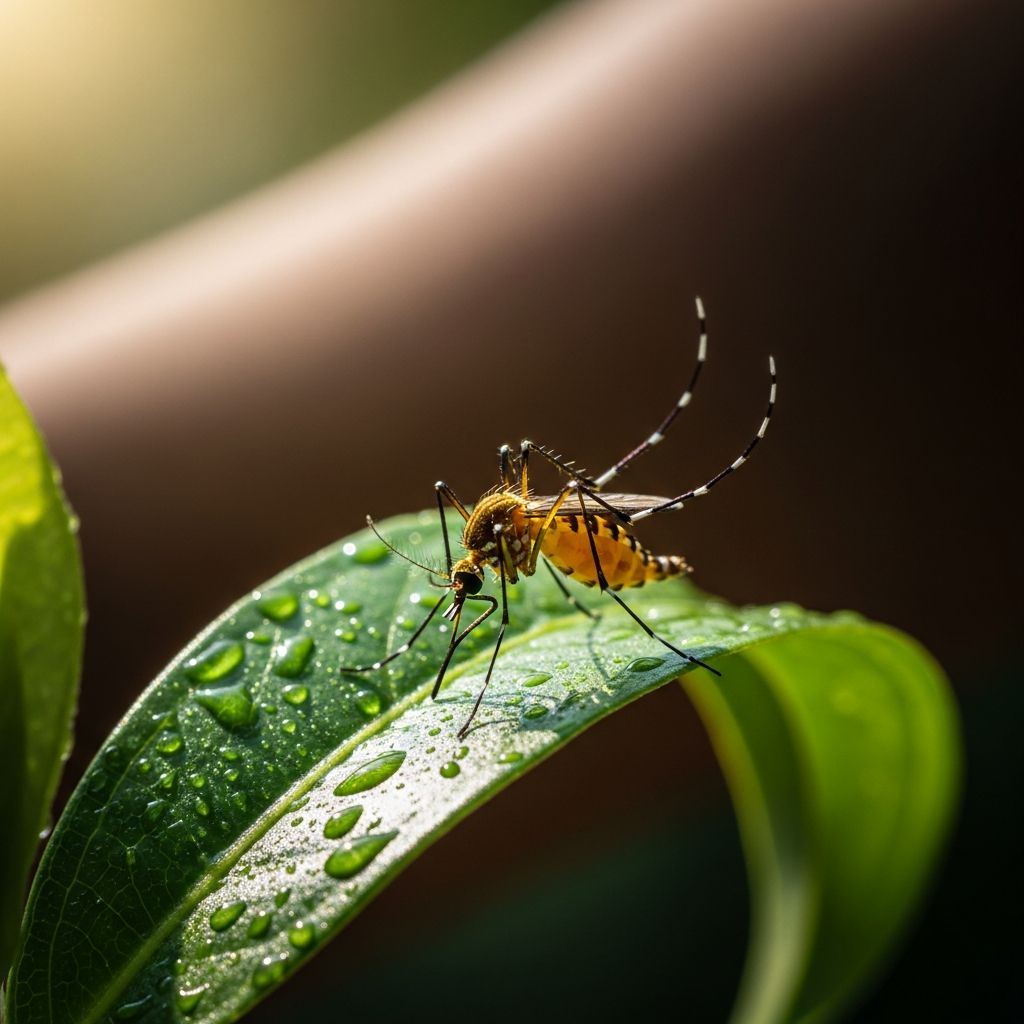
Yellow fever is an acute viral haemorrhagic disease transmitted by infected Aedes and Haemagogus species of mosquitoes. The yellow fever virus is an RNA virus that belongs to the family Flaviviridae and genus Flavivirus. It is endemic in tropical areas of Africa and Central and South America, posing a significant threat to global health security due to its potential for outbreaks and international spread. The disease gets its name from the jaundice that affects some patients, turning the skin and whites of the eyes yellow.
Human infection with yellow fever virus occurs via the bite of an infected female mosquito. The mosquito injects the virus into the bloodstream while feeding. After an incubation period of 3–6 days, most people experience mild or no symptoms, but about 15% develop severe illness with high fatality rates of 30–60%. The virus causes liver damage leading to jaundice, bleeding disorders, and multi-organ failure in severe cases. Yellow fever remains a public health concern, with an estimated 200,000 cases and 30,000 deaths annually, primarily in unvaccinated populations.
Who gets yellow fever?
Yellow fever primarily affects individuals in or traveling to endemic regions of sub-Saharan Africa and South America. Children and older adults are at higher risk of severe disease. Unvaccinated travelers from non-endemic areas are particularly vulnerable, as they lack prior exposure and immunity. Outbreaks often occur in urban slums, rural villages, and forested areas where mosquito vectors thrive. People with compromised immune systems, such as those with HIV, cancer, or on immunosuppressive therapy, face increased severity. Sylvatic (jungle) cycles involve transmission between non-human primates and mosquitoes, with humans infected incidentally, while urban cycles sustain human-to-human spread via domestic Aedes aegypti mosquitoes.
Related conditions
- Dengue fever
- Zika virus disease
- Chikungunya
- Malaria
- Leptospirosis
- Viral hepatitis
History
Yellow fever has shaped history through major epidemics. It ravaged the Americas during the colonial era, earning the nickname “yellow jack.” The 1793 Philadelphia outbreak killed 10% of the population. Cuban physician Carlos Finlay proposed mosquito transmission in 1881, confirmed by Walter Reed’s 1900 experiments, enabling Panama Canal construction. The virus was first isolated in 1927. Recent outbreaks include Angola’s 2016 epidemic (over 4,000 cases) and ongoing risks in Africa and Brazil. Eradication efforts failed due to mosquito resurgence and vaccine hesitancy.
Establishing the diagnosis
Diagnosis is challenging due to non-specific initial symptoms mimicking influenza, dengue, or malaria. Clinical suspicion arises from travel history to endemic areas plus fever, jaundice, or hemorrhagic signs. Key diagnostic methods include:
- RT-PCR: Detects viral RNA in blood during first 5 days; gold standard for acute infection.
- Serology: IgM ELISA for antibodies (appears day 5–7); plaque reduction neutralization test confirms specificity.
- Histopathology: Liver biopsy shows mid-zonal necrosis, Councilman bodies, and steatosis in fatal cases.
- Other tests: Elevated transaminases (AST>ALT), bilirubin, PT/INR; thrombocytopenia, leukopenia.
WHO recommends PCR and serology for surveillance. Differential diagnosis excludes leptospirosis, Lassa fever, and other viral hemorrhagic fevers.
Yellow fever symptoms
Yellow fever progresses in three phases:
- Infection phase (3–6 days post-exposure): Sudden fever (>38.5°C), chills, severe headache, myalgias (especially back), arthralgias, nausea, vomiting, fatigue, flushed face. Lasts 3–4 days; symptoms resolve in 85%.
- Remission phase: Brief improvement (hours to 24 hours) in 15% of symptomatic cases.
- Toxic phase (15% of infections): Recurrent high fever, jaundice, hemorrhagic diathesis (epistaxis, hematemesis, melena), abdominal pain, renal failure (oliguria, albuminuria), shock, encephalopathy (delirium, seizures, coma). Fatality 30–60%; survivors gain lifelong immunity.
Related Stories



Post-recovery fatigue may persist months.
| Phase | Common Symptoms | Duration | Fatality |
|---|---|---|---|
| Infection | Fever, headache, myalgia, nausea | 3–4 days | 0% |
| Remission | Improvement | Hours–1 day | – |
| Toxic | Jaundice, bleeding, organ failure | 7–10 days | 30–60% |
Complications
Severe yellow fever leads to acute liver failure (hepatitis), acute kidney injury, coagulopathy (DIC), myocardial dysfunction, and secondary bacterial infections. Neurological complications include encephalitis. Long-term sequelae in survivors: viral load clearance confers lifelong immunity, but weakness persists. Pregnant women risk fetal death; contraindicated vaccine groups include infants <6 months, egg-allergic, immunocompromised.
Prevention of yellow fever
Vaccination is cornerstone: single dose 17D vaccine provides lifelong protection (>99% seroconversion); boosters unnecessary per WHO. Required for travel to endemic zones; certificate valid for life. Avoid in contraindicated groups.
Mosquito control: Eliminate breeding sites, use insecticide sprays, bednets, repellents (DEET 30–50%). Personal protection: long clothing, screens. Mass campaigns during outbreaks.
Yellow fever vaccine
The live-attenuated 17D vaccine (YF-VAX, Stamaril) is safe, effective. Administered subcutaneously; side effects rare (headache, myalgia). Adverse events: viscerotropic (multi-organ failure, 0.3–0.8/million doses), neurotropic (0.8/million). Contraindicated: <9 months Africa/<6 months elsewhere, allergy, immunosuppression, pregnancy. Boosters not needed; fractional dosing in shortages.
Treatment of yellow fever
No specific antiviral; supportive care only. Mild cases: rest, hydration, acetaminophen (avoid ASA/NSAIDs due to bleeding risk). Severe: hospitalize for ICU monitoring, IV fluids, electrolytes, blood products (FFP, platelets), dialysis, mechanical ventilation. Manage shock, bleeding, organ failure. Experimental: sofosbuvir, TY014 in trials only. Antibiotics for secondary infections. Mortality high despite care.
Yellow fever images
Clinical images typically show jaundice (scleral icterus, skin yellowing), petechiae, ecchymoses, conjunctival suffusion, and hemorrhagic manifestations like epistaxis or hematemesis. Liver biopsies reveal characteristic mid-zonal necrosis.
Frequently Asked Questions
Q: Is there a cure for yellow fever?
No specific antiviral treatment exists; management is supportive with rest, fluids, and symptom relief.
Q: How soon after infection do symptoms appear?
Incubation period is 3–6 days.
Q: Is yellow fever contagious person-to-person?
No, only via mosquito vectors.
Q: Who should get the yellow fever vaccine?
Travelers to endemic areas; required for entry to some countries.
Q: What is the fatality rate in severe cases?
30–60%.
Q: Can yellow fever be prevented without vaccine?
Yes, via mosquito bite prevention: repellents, nets, clothing.
References
- Yellow fever: symptoms, treatment, prevention — Institut Pasteur. 2023. https://www.pasteur.fr/en/medical-center/disease-sheets/yellow-fever
- Symptoms, Diagnosis, and Treatment | Yellow Fever | CDC — Centers for Disease Control and Prevention. 2024-10-03. https://www.cdc.gov/yellow-fever/symptoms-diagnosis-treatment/index.html
- Yellow fever – WHO fact sheet — World Health Organization. 2024-03-11. https://www.who.int/news-room/fact-sheets/detail/yellow-fever
- Yellow Fever: Symptoms and Treatment — WebMD. 2023. https://www.webmd.com/a-to-z-guides/yellow-fever-symptoms-treatment
- Yellow fever — NHS UK. 2023-07-25. https://www.nhs.uk/conditions/yellow-fever/
Similar Articles








Read full bio of medha deb