Yolk Sac in Early Pregnancy: Meaning & Function
Understanding the yolk sac's critical role in early pregnancy development and health indicators.
What Is a Yolk Sac?
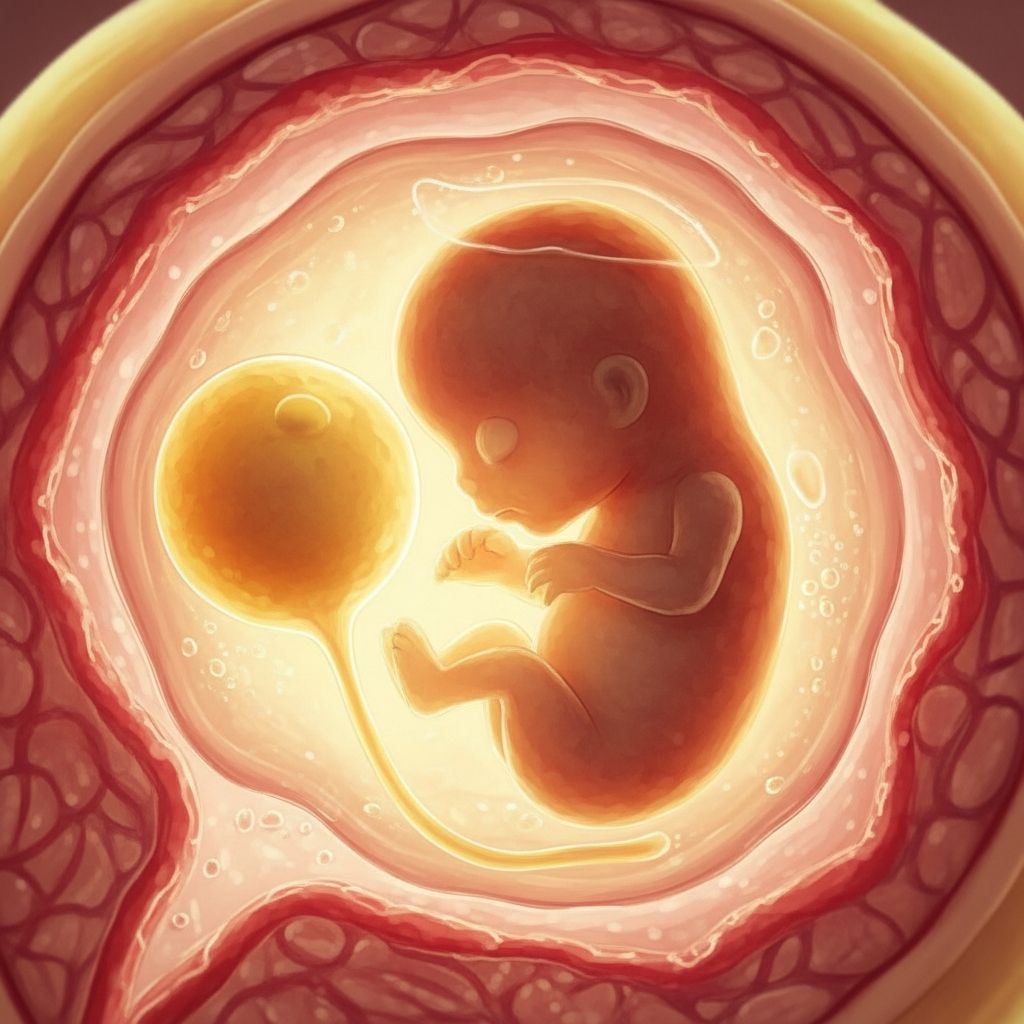
A yolk sac is a specialized structure that develops inside your uterus early in pregnancy. It is one of the first structures that becomes visible during prenatal ultrasound examination and serves as a critical marker of a developing pregnancy. The yolk sac is a round or pear-shaped pouch made of thin, skin-like membranes that attaches to the outside of the developing embryo. Understanding what the yolk sac is and how it functions is essential for expectant parents and healthcare providers in monitoring early pregnancy health.
The yolk sac is located inside the gestational sac, which is a large cavity filled with fluid inside the uterus that surrounds the embryo. For a pregnancy to be considered normal, the yolk sac must be positioned inside the gestational sac, and the gestational sac must be inside the uterus. If the yolk sac is positioned abnormally or outside of these expected locations, it may indicate that the pregnancy has failed or will fail.
Essential Functions of the Yolk Sac
The yolk sac plays many crucial roles during early fetal development, particularly before the placenta and other organs fully develop. These functions are vital to the health and viability of the developing pregnancy:
- Provides essential nutrients to the developing embryo during the earliest stages of pregnancy
- Circulates gases, including oxygen and carbon dioxide, between the mother and the fetus
- Produces cells that develop into important reproductive and blood-forming structures
- Serves as a temporary nutritional support system until the placenta takes over these functions
Timeline of Yolk Sac Development
The yolk sac develops according to a predictable timeline during early pregnancy. Understanding this developmental sequence helps healthcare providers determine if a pregnancy is progressing normally.
Week Two of Pregnancy: The yolk sac begins to develop during the second week of gestation. This marks the beginning of this important structure’s role in supporting the developing embryo.
Week Five: Healthcare providers can first detect the yolk sac using transvaginal ultrasound around week five of pregnancy. This early visualization is one of the first confirmations that a pregnancy is developing inside the uterus rather than elsewhere.
Weeks Five to Ten: During this period, the yolk sac grows steadily as the pregnancy progresses. The structure increases in size in a linear fashion, and healthcare providers monitor these measurements to ensure normal development.
After Week Ten: The yolk sac gradually begins to shrink as the embryo’s own developing organs and the placenta start to take over the yolk sac’s nutritional and supportive functions. By weeks 14 to 20, the yolk sac may no longer be visible on ultrasound as the embryo has absorbed it completely.
How Healthcare Providers Examine the Yolk Sac
Prenatal ultrasonography is the primary method used by healthcare providers to examine the yolk sac. During an ultrasound examination, your healthcare provider will evaluate several important characteristics of the yolk sac to ensure it appears normal and healthy:
- Size and diameter measurements
- Shape and overall appearance
- Location within the gestational sac
- Presence of a fetal pole, which is the early form of an embryo that may appear next to the yolk sac
Related Stories



If any of these characteristics appear abnormal, your healthcare provider may recommend a follow-up ultrasound in one to two weeks to recheck the yolk sac and determine if there is a cause for concern.
Normal Yolk Sac Measurements and Appearance
A normal, healthy yolk sac has specific characteristics that healthcare providers use to assess pregnancy viability and health. Knowing what constitutes normal measurements can help reduce anxiety during early prenatal care.
Size and Diameter: In a typical early pregnancy, a yolk sac’s diameter is usually 3 to 5 millimeters, measured from one inside rim to the other. These measurements are consistent across normal pregnancies and help establish that development is proceeding as expected.
Shape: A normal yolk sac typically appears round or pear-shaped. This regular, symmetrical appearance is reassuring and indicates healthy development.
Composition: The yolk sac is made entirely of thin membranes and appears as a distinct structure on ultrasound imaging. A normal yolk sac does not have irregular areas or hardened regions on its surface.
Abnormal Yolk Sac Findings
While some abnormal yolk sac findings may indicate problems with the pregnancy, it is important to understand that abnormal appearance does not always mean the pregnancy will not continue. Your healthcare provider will discuss any abnormal findings with you and explain what additional tests or monitoring may be necessary.
Enlarged Yolk Sac: If a yolk sac is larger than 6 millimeters at any gestational age, it might indicate a problem with the pregnancy. An enlarged yolk sac can be an early sign of miscarriage, and your healthcare provider will likely recommend close monitoring and follow-up ultrasounds to assess the situation.
Irregular Shape: An abnormal yolk sac might be shaped irregularly or appear hardened on certain areas along its outer surface or all over the sac. While an abnormal shape may indicate a pregnancy problem, it might not necessarily predict a negative outcome, and further evaluation is essential.
Multiple Yolk Sacs: If an ultrasound detects more than one yolk sac, you may have multiple embryos, such as twins or triplets. Each embryo developing normally will have its own yolk sac.
Absent Yolk Sac: If your healthcare provider cannot see a yolk sac, it might indicate that the pregnancy is not viable, meaning it won’t result in a birth. However, this finding can also mean that the estimated gestational age is incorrect. Your healthcare provider may recommend another ultrasound in one to two weeks to look again and clarify the situation.
Yolk Sac as a Pregnancy Viability Marker
A normal yolk sac is one of the most important indicators of a healthy early pregnancy. The presence of a normally developing yolk sac helps confirm that you are pregnant and that the pregnancy is in the correct location inside your uterus. Combined with other factors such as a missed menstrual cycle and appropriate levels of certain pregnancy hormones in your blood, a normal yolk sac provides reassurance about early pregnancy health.
Healthcare providers rely on yolk sac characteristics to assess pregnancy viability and to identify pregnancies that may be at risk for complications or loss. Regular monitoring of the yolk sac during early pregnancy can help catch potential problems early when intervention may be most effective.
Yolk Sac Tumors: A Different Condition
While the yolk sac is an essential and normal part of early pregnancy, it is important to understand that a yolk sac tumor is a completely different and unrelated condition. A yolk sac tumor is a rare type of cancer, sometimes called a germ cell tumor or endodermal sinus tumor. This cancer starts in the cells that line the yolk sac and forms a tumor sometime after birth.
Yolk sac tumors most commonly occur in the ovaries or testes, though they can appear elsewhere in the body. The condition is usually diagnosed in children but can be diagnosed later in life. These tumors are the most common type of cancerous germ cell tumor diagnosed in children and can produce hormones that lead to certain changes in the body as a person grows. Germ cell tumors require medical evaluation and treatment but are unrelated to the yolk sac’s normal function during pregnancy.
Frequently Asked Questions About the Yolk Sac
Q: When can I first see the yolk sac on ultrasound?
A: Healthcare providers can typically see the yolk sac using transvaginal ultrasound starting around week five of pregnancy. This is one of the earliest confirmations of a developing pregnancy.
Q: What is the normal size of a yolk sac?
A: In a typical early pregnancy, a yolk sac’s diameter is usually 3 to 5 millimeters. If it measures larger than 6 millimeters, it may indicate a potential problem with the pregnancy.
Q: Does the yolk sac stay throughout pregnancy?
A: No, the yolk sac is gradually absorbed by the embryo after week 10 of pregnancy. By weeks 14 to 20, it may no longer be visible on ultrasound as development progresses.
Q: What does it mean if no yolk sac is visible?
A: If a yolk sac cannot be seen, it might indicate a non-viable pregnancy, or it could mean the gestational age estimate is incorrect. Your healthcare provider will likely recommend a follow-up ultrasound in one to two weeks for clarification.
Q: Can an abnormal yolk sac appearance mean the pregnancy will end?
A: An abnormal yolk sac appearance might indicate a pregnancy problem, but it doesn’t necessarily predict a negative outcome. Your healthcare provider will discuss the findings and may recommend additional monitoring or testing.
Q: What does multiple yolk sacs mean?
A: If more than one yolk sac is detected, you likely have multiple embryos developing, such as twins, triplets, or more. Each embryo should have its own yolk sac.
References
- Yolk Sac in Early Pregnancy: Meaning & Function — Cleveland Clinic. 2024. https://my.clevelandclinic.org/health/body/22341-yolk-sac
- Early pregnancy ultrasound measurements and prediction of first trimester miscarriage: A prospective cohort study — Nature Scientific Reports. 2020. https://www.nature.com/articles/s41598-020-58114-3
- Yolk Sac Tumor: Symptoms, Diagnosis & Prognosis — Cleveland Clinic. 2024. https://my.clevelandclinic.org/health/diseases/yolk-sac-tumor
- Ovarian Germ Cell Tumors: Causes & Treatment — Cleveland Clinic. 2024. https://my.clevelandclinic.org/health/diseases/6186-ovarian-germ-cell-tumors
- Nomogram for predicting testicular yolk sac tumor in children based on alpha-fetoprotein, age, and ultrasound blood flow signals — National Institutes of Health. 2024. https://pmc.ncbi.nlm.nih.gov/articles/PMC11598321/
Similar Articles








Read full bio of medha deb