Zenker’s Diverticulum: Symptoms, Causes & Treatment
Understanding Zenker's diverticulum: causes, symptoms, diagnosis, and modern treatment options.
What Is Zenker’s Diverticulum?
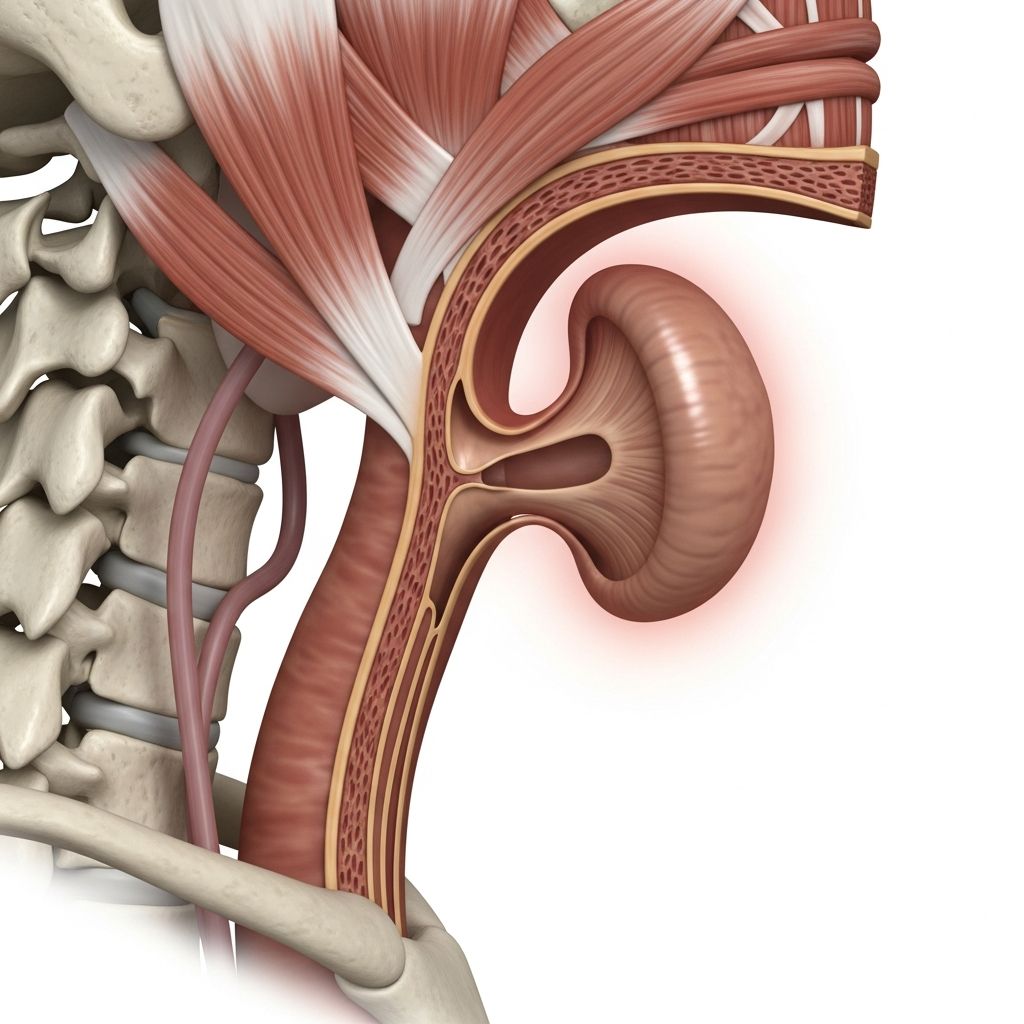
Zenker’s diverticulum is an acquired sac-like outpouching of tissue that forms in the pharyngoesophageal junction, located at the top of the esophagus between the throat and upper portion of the food tube. This condition develops through a weak area called Killian’s dehiscence, which is located dorsally in the pharyngeal wall. The diverticulum occurs when tissue weakens and allows the inner layer of the esophagus to push through, creating a pouch where food and liquid can become trapped. Zenker’s diverticula are the most common type of esophageal diverticula, and they predominantly affect elderly patients, particularly those over 70 years of age.
The formation of this pouch is closely associated with dysfunction of the cricopharyngeal muscle, which normally acts as a valve to control the movement of food and liquid from the throat into the esophagus. When this muscle doesn’t function properly, it leads to increased pressure within the throat, which over time contributes to the development of the diverticulum. Understanding this condition is crucial because it can significantly impact quality of life and nutritional status if left untreated.
Causes and Risk Factors
The primary cause of Zenker’s diverticulum is impaired coordination of the cricopharyngeal muscle, which controls the passage of food into the esophagus. This dysfunction leads to increased intraluminal pressure in the pharynx, creating the environment necessary for pouch formation. Several factors contribute to the development of this condition:
- Advanced age, with most cases occurring in individuals over 70 years old
- Chronic increased pressure in the pharynx and upper esophagus
- Connective tissue disorders that weaken esophageal tissue
- History of acid reflux disease
- Smoking and heavy alcohol consumption
- Neuromuscular conditions affecting muscle coordination
- Male gender, with men being more commonly affected than women
In rare cases, Zenker’s diverticulum can develop in association with neuromuscular disorders such as Charcot-Marie-Tooth disease, which causes progressive weakness and degeneration of peripheral nerves that control muscle function, including the cricopharyngeal muscle.
Symptoms and Complications
Individuals with Zenker’s diverticulum often experience a range of symptoms that can vary in severity. The most common symptoms include dysphagia (difficulty swallowing), which can affect the ingestion of solids, liquids, or both. Other frequently reported symptoms include:
- Regurgitation of food, particularly undigested meals eaten hours before
- Chronic cough and throat clearing
- Halitosis (bad breath) due to trapped food in the pouch
- Aspiration of food or liquid into the lungs
- Noisy swallowing or gurgling sounds in the throat
- Weight loss and malnutrition due to difficulty eating
- Sensation of a lump in the throat
- Intractable vomiting in severe cases
The severity of symptoms typically correlates with the size of the diverticulum. Smaller pouches may cause minimal symptoms, while larger ones, often measuring several centimeters in diameter, can severely impact swallowing and nutrition. If left untreated, the condition can lead to serious complications including aspiration pneumonia, esophageal obstruction, and significant weight loss.
Diagnosis and Diagnostic Tests
Several diagnostic methods are employed to confirm Zenker’s diverticulum and assess its severity. The diagnosis typically begins with clinical evaluation and specialized imaging studies.
Esophagogastroduodenoscopy (EGD)
EGD is a primary diagnostic tool that allows physicians to visualize the diverticulum directly. During this procedure, a thin, flexible tube with a camera is passed down the throat to examine the esophagus and identify the pouch. Initial examination via EGD can reveal a dilated esophagus with the diverticulum and may show evidence of outflow obstruction caused by the pouch.
Related Stories



Esophageal Manometry
This test measures the pressure and muscle contractions in the esophagus. Esophageal manometry helps evaluate for underlying motility disorders and assesses the function of the cricopharyngeal muscle and esophageal body. The test can reveal abnormal pressure patterns that contribute to diverticulum formation.
Barium Swallow Study
A barium swallow radiograph provides detailed imaging of the esophagus and can clearly show the location, size, and shape of the diverticulum as the patient swallows barium contrast material.
Upper Endoscopy with Additional Imaging
Advanced imaging may include direct laryngoscopy to assess the anatomy of the pharynx and help determine the best treatment approach.
Treatment Options
Management of Zenker’s diverticulum has evolved significantly from purely open surgical approaches to include minimally invasive endoscopic techniques. Treatment recommendations depend on symptom severity, diverticulum size, patient age, and overall health status.
Watchful Waiting
Patients with asymptomatic or minimally symptomatic Zenker’s diverticula may be managed conservatively with regular monitoring. However, once symptoms develop that impact quality of life or nutritional intake, intervention is typically recommended.
Endoscopic Approaches
Minimally invasive endoscopic techniques have become increasingly popular due to shorter operative times, faster recovery, and reduced hospital stays compared to traditional surgery.
Zenker’s Peroral Endoscopic Myotomy (Z-POEM): This is an advanced endoscopic technique that has gained significant traction in recent years. Z-POEM demonstrated superior clinical success rates when compared to flexible and rigid diverticulotomy approaches, with success rates that were significantly higher. The procedure involves making an incision in the common wall between the diverticulum and esophagus, creating a wide opening that allows food to pass through normally. Z-POEM showed a pooled adverse event rate of 9.4%, with fewer perforations (2.25%) compared to rigid diverticulotomy (7.78%) and flexible diverticulotomy (4.62%). Importantly, there were no reported deaths associated with Z-POEM, whereas two deaths were reported post-rigid diverticulotomy, further underscoring its safety profile.
Flexible and Rigid Endoscopic Diverticulotomy: These approaches involve using endoscopic stapling techniques to close the common wall between the diverticulum and esophagus. The cooperative approach by gastroenterology and otolaryngology specialists has proven to be highly effective, with technical success achieved in all cases and excellent clinical outcomes. These procedures are typically performed as outpatient procedures with mean operative times of approximately 38.4 minutes. However, these methods require favorable anatomy and clear endoscopic visualization to perform safely, as anatomical constraints can limit access and visualization.
Open Surgical Approaches
Traditional open surgery remains an option, particularly when endoscopic approaches are not feasible due to anatomical constraints or failed endoscopic intervention. Surgical options include:
Diverticulectomy with Cricopharyngeal Myotomy: This involves surgical removal of the diverticulum combined with division of the cricopharyngeal muscle fibers to relieve the underlying pressure that contributes to pouch formation. Open cricopharyngeal myotomy may be preferred when anatomical factors preclude safe endoscopic intervention. Despite longer operative times (mean 180 minutes compared to endoscopic approaches of 27-53 minutes), this approach allows for precise dissection adapted to the patient’s specific anatomy and reduces traction on vital structures such as the recurrent laryngeal nerves.
Diverticulum Suspension (Diverticopexy): Instead of removing the diverticulum, the pouch may be repositioned and suspended to prevent food from entering it, thereby obliterating its function.
Comparison of Treatment Modalities
| Treatment Method | Technical Success | Clinical Success | Adverse Events | Operative Time | Recovery Time |
|---|---|---|---|---|---|
| Z-POEM | Excellent | Significantly higher vs. flexible/rigid | 9.4% (lower perforation rate: 2.25%) | 27-53 minutes | Rapid, outpatient |
| Flexible Diverticulotomy | Good | Baseline comparison | 12.4% (perforation: 4.62%) | 22-60 minutes | Rapid, outpatient |
| Rigid Diverticulotomy | Good | Baseline comparison | Variable (perforation: 7.78%) | 53.7-54.0 minutes | Rapid, outpatient |
| Open Surgical Myotomy | Excellent | Excellent | Higher when anatomy unfavorable | ~180 minutes | Longer hospitalization |
Procedural Details and Success Rates
A cooperative endoscopic approach utilizing both gastroenterology and otolaryngology specialists represents an innovative treatment paradigm. In one comprehensive study of this collaborative approach, technical success was achieved in all cases, with diverticula averaging 36.3 mm in size and food debris found in 30.1% of procedures. The mean procedure length was 38.4 minutes, and all cases were performed on an outpatient basis, allowing patients to return home the same day. Among the patients studied, 79.4% had dysphagia affecting solid foods, while 19.0% experienced difficulty with both solids and liquids, along with other symptoms such as regurgitation (20.6%), chronic cough (20.6%), and halitosis (14.3%).
Recovery and Post-Procedural Outcomes
Recovery varies depending on the treatment approach selected. Endoscopic procedures typically result in rapid recovery with minimal postoperative discomfort. Patients are usually able to resume oral intake within 24-48 hours after endoscopic procedures. Following open surgery, recovery takes longer, with patients typically hospitalized for several days and requiring several weeks before resuming normal diet and activities.
Long-term outcomes are generally favorable with modern approaches. Reintervention rates are similar across different endoscopic modalities, and symptom resolution is typically sustained. The recurrence of symptoms can occur in some cases, necessitating either medical management or repeat intervention.
Complications and Risk Management
While both endoscopic and surgical approaches are generally safe, certain complications can occur. Potential complications include:
- Esophageal perforation (less common with Z-POEM)
- Bleeding at the procedure site
- Infection
- Recurrent laryngeal nerve injury causing hoarseness
- Vocal cord paralysis (rare with careful dissection)
- Incomplete symptom resolution
- Recurrence of the diverticulum
The choice of procedure should take into account patient-specific anatomical factors, as unfavorable anatomy may necessitate conversion from endoscopic to open surgical approaches.
Frequently Asked Questions
Q: Is Zenker’s diverticulum a cancer?
A: No, Zenker’s diverticulum is not cancer. It is a benign pouch formation in the esophagus caused by weakness and dysfunction of the cricopharyngeal muscle. However, chronic irritation from the condition should be monitored by your healthcare provider.
Q: Can Zenker’s diverticulum go away on its own?
A: No, Zenker’s diverticulum cannot resolve spontaneously. Once formed, the pouch persists and typically progresses over time. However, asymptomatic cases may be monitored without immediate treatment. Once symptoms develop, intervention is usually necessary.
Q: What is the best treatment for Zenker’s diverticulum?
A: The best treatment depends on individual factors including symptom severity, diverticulum size, patient age, overall health, and anatomical considerations. Z-POEM has demonstrated superior clinical success rates, while cooperative endoscopic approaches have shown excellent outcomes. Your healthcare provider will recommend the most appropriate option based on your specific situation.
Q: How long does recovery take after treatment?
A: Recovery time varies by procedure. Endoscopic approaches typically allow patients to return home the same day with rapid symptom improvement. Open surgical approaches require hospitalization and a longer recovery period of several weeks. Most patients can resume normal eating within days to weeks depending on the procedure.
Q: What happens if Zenker’s diverticulum is left untreated?
A: Untreated Zenker’s diverticulum can lead to progressive malnutrition, significant weight loss, aspiration pneumonia, and severely compromised quality of life. Early intervention when symptoms develop is important to prevent these serious complications.
Q: Is there risk of serious complications from the procedures?
A: Modern treatment approaches are generally safe with low complication rates. Z-POEM has shown favorable safety profiles with adverse event rates of 9.4% and no reported mortality in clinical studies. Your healthcare team will discuss specific risks based on your individual circumstances and the chosen procedure.
References
- A cooperative approach for treatment of Zenker’s diverticulum — PubMed Central. 2021-09-15. https://pubmed.ncbi.nlm.nih.gov/34524532/
- Zenker’s Diverticulum with Charcot-Marie-Tooth Disease: A Case Report of Rare Occurrence in a Middle-aged Male Treated with Esophageal Cricopharyngeal Myotomy — Gavin Publishers. 2024. https://www.gavinpublishers.com/article/view/zenkers-diverticulum-with-charcot-marietooth-disease
- Comparative effect between Zenker’s peroral endoscopic myotomy and alternative treatments — Oxford Academic. 2024. https://academic.oup.com/dote/article/doi/10.1093/dote/doaf047/8198744
- Esophageal Diverticulum: Symptoms, Types & Treatment — Cleveland Clinic. https://my.clevelandclinic.org/health/diseases/16977-esophageal-diverticulum
- Are there alternatives to surgery for Zenker diverticulum? — Cleveland Clinic Journal of Medicine. https://www.ccjm.org/content/83/9/645
Similar Articles








Read full bio of Sneha Tete