Zollinger-Ellison Syndrome: Causes, Symptoms & Treatment
Complete guide to understanding Zollinger-Ellison syndrome diagnosis and management.
Understanding Zollinger-Ellison Syndrome
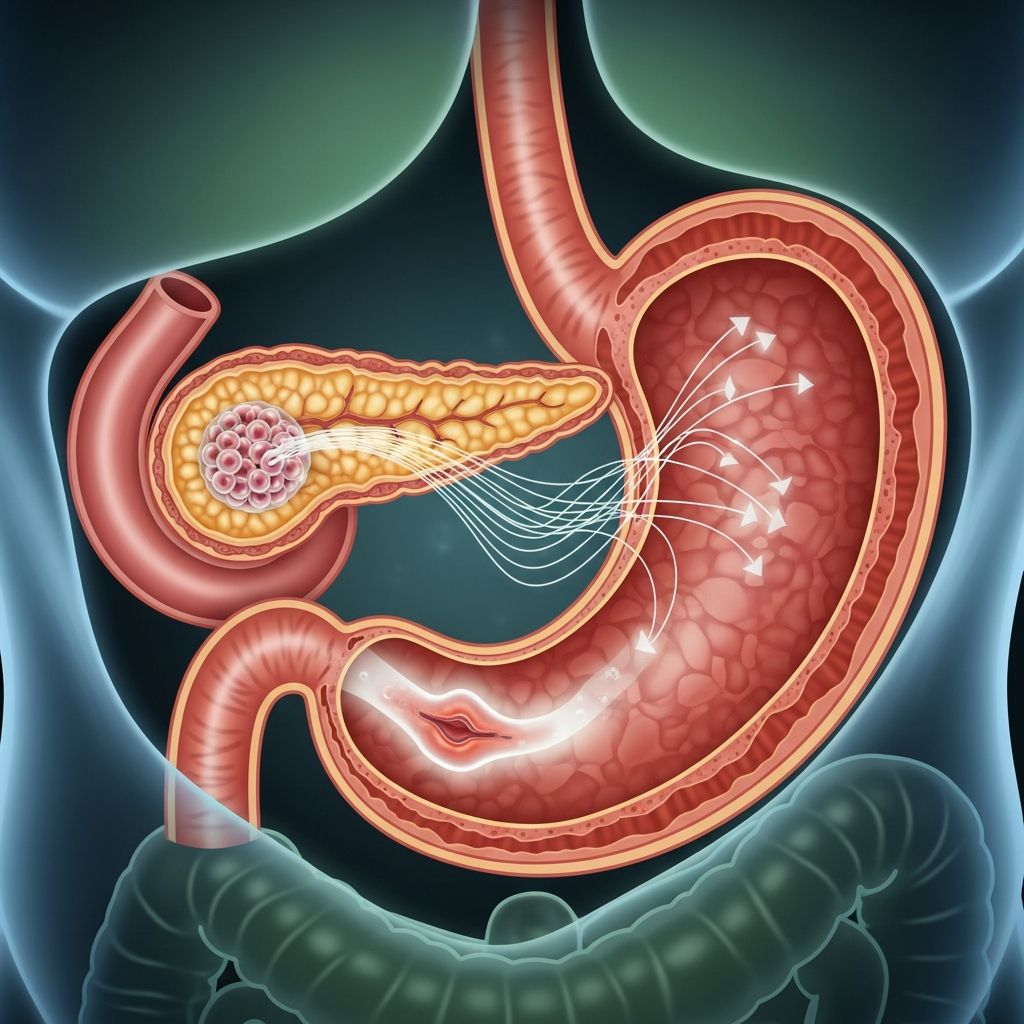
Zollinger-Ellison syndrome (ZES) is a rare digestive disorder characterized by the development of one or more tumors called gastrinomas that produce excessive amounts of gastrin, a hormone that regulates stomach acid production. This condition was first described in 1955 and remains a challenging diagnosis due to its nonspecific symptoms that overlap with other gastrointestinal disorders. The average time between symptom onset and final diagnosis often exceeds five years, highlighting the diagnostic complexity of this condition.
In ZES, the gastrin-producing tumors cause abnormally increased gastric acid production, leading to severe acid-related complications. Most commonly, gastrinomas arise within the wall of the duodenum or within the pancreas. While ZES can occur sporadically, it is also associated with multiple endocrine neoplasia syndrome type 1 (MEN1), a genetic condition that increases the risk of developing multiple tumors.
Causes and Risk Factors
Zollinger-Ellison syndrome results from gastrin-secreting neuroendocrine tumors that function independently of the body’s normal regulatory mechanisms. These tumors continuously secrete gastrin regardless of the stomach’s acid levels or nutritional status. The gastrinomas can be solitary or multiple, and they have the potential to be cancerous (malignant).
The primary risk factor for developing ZES is having multiple endocrine neoplasia type 1 (MEN1), a hereditary genetic condition. Individuals with MEN1 have approximately a 20-30% lifetime risk of developing gastrinomas. In these patients, gastrinomas tend to be smaller, more numerous, and more likely to be malignant compared to sporadic cases. Other rare associations include neurofibromatosis type 1 and von Hippel-Lindau syndrome.
Sporadic gastrinomas account for approximately 75-80% of cases and typically present as solitary tumors. These cases have a better prognosis when identified early, though approximately 60-90% of sporadic gastrinomas have metastasized at the time of diagnosis.
Clinical Presentation and Symptoms
ZES presents with a characteristic triad of clinical features: gastric acid hypersecretion, elevated fasting serum gastrin levels, and peptic ulcer disease with diarrhea. However, individual symptoms can vary considerably among patients, and the severity often exceeds that seen in typical peptic ulcer disease.
Primary Symptoms
The most common manifestations of Zollinger-Ellison syndrome include:
- Abdominal pain: Occurs in 70-100% of patients, typically described as a gnawing or burning sensation in the epigastric region
- Diarrhea: Presents in 37-73% of patients and may sometimes be the only symptom; it typically resolves with proton-pump inhibitor (PPI) therapy
- Gastroesophageal reflux disease (GERD): Affects approximately 44% of patients with severe heartburn and esophageal irritation
- Nausea and vomiting: Caused by excessive acid production and gastric irritation
- Weight loss: Results from reduced appetite, chronic gastrointestinal symptoms, and malabsorption
Less Common Presentations
Additional symptoms that may occur include gastrointestinal bleeding manifesting as black or tarry stools, steatorrhea (fatty stools), and bone pain particularly in patients with metastatic disease. Severe complications can develop, including peptic ulcer perforation, which creates an abnormal opening into the abdominal cavity causing acute, severe pain, peritonitis, and requiring emergency intervention.
Diagnostic Approach
Diagnosing Zollinger-Ellison syndrome requires a high index of clinical suspicion, particularly in patients with refractory or recurrent peptic ulcer disease, severe diarrhea, or acid-related symptoms unresponsive to standard therapy. The diagnostic challenge is compounded by the nonspecific nature of symptoms, which frequently leads to delayed diagnosis.
Related Stories



Initial Diagnostic Tests
The cornerstone of ZES diagnosis involves measuring fasting serum gastrin levels and gastric pH:
- Fasting serum gastrin: A level above 1000 pg/mL in the setting of gastric pH below 2 is virtually diagnostic of ZES
- Gastric pH: Values below 2 must be documented to confirm gastric acid hypersecretion
- Gastric acid output: May be measured to assess baseline acid secretion
Confirmatory Testing
When baseline gastrin levels are borderline (typically 100-1000 pg/mL), provocative tests help confirm the diagnosis:
- Secretin stimulation test: The gold standard confirmatory test; a paradoxical increase in gastrin levels of more than 200 pg/mL above baseline supports ZES diagnosis
- Calcium infusion test: Used as an alternative provocative test
- Glucagon test: May be employed in select cases
Endoscopic Evaluation
Esophagogastroduodenoscopy (EGD) allows direct visualization of the esophagus, stomach, and duodenum to assess for ulcers and their extent. The pattern and location of ulcers in ZES often differs from typical peptic ulcer disease, with multiple ulcers extending to the lower duodenum or jejunum. Endoscopic ultrasound (EUS) combines endoscopy with ultrasound imaging to help localize small gastrinomas, particularly in the duodenal wall.
Localization Studies
Once ZES diagnosis is confirmed, imaging studies help identify tumor location and staging:
- Abdominal CT and MRI: Standard cross-sectional imaging modalities
- Somatostatin receptor scintigraphy (SRS): Detects tumors expressing somatostatin receptors
- Gallium-68 DOTATATE PET: Advanced functional imaging with superior sensitivity for neuroendocrine tumors
- Chest CT: Evaluates for pulmonary metastases
Genetic Testing
Genetic testing for MEN1 mutations is recommended for all patients with ZES, particularly those with family history, early-onset disease, or multiple gastrinomas. MEN1-associated ZES typically develops at a younger age and often involves multiple tumors.
Treatment Options
Management of Zollinger-Ellison syndrome involves two primary approaches: controlling gastric acid hypersecretion and addressing the underlying gastrinoma tumors. Before the introduction of effective acid-reducing medications, surgery was often the only treatment option, but modern pharmacotherapy has dramatically improved patient outcomes.
Pharmacological Management
Proton-pump inhibitors (PPIs) represent the cornerstone of medical therapy for ZES, as they effectively suppress gastric acid secretion and resolve acid-related symptoms and complications.
- PPIs are significantly more potent than histamine-2 receptor antagonists in controlling acid secretion
- Typical dosing often requires higher-than-standard doses to achieve adequate acid suppression
- The disappearance of diarrhea following PPI treatment is characteristic of ZES and represents a key diagnostic indicator
- Long-term PPI therapy is typically required and is generally well-tolerated
Tumor-Directed Therapy
Treatment of the gastrinoma itself depends on tumor size, location, stage, and metastatic status. Options include:
- Surgical resection: The primary curative approach when feasible; may involve tumor enucleation or formal resection with lymphadenectomy
- Somatostatin analogs: Long-acting agents that inhibit gastrin secretion and have antiproliferative effects
- Molecular targeted therapy: For advanced or metastatic disease, including mammalian target of rapamycin (mTOR) inhibitors and tyrosine kinase inhibitors
- Chemotherapy: Considered for aggressive or rapidly progressive metastatic disease
- Hepatic-directed therapies: For patients with liver metastases, including surgical resection, ablation, or embolization when appropriate
Complications and Prognosis
Untreated or inadequately managed Zollinger-Ellison syndrome can lead to serious, life-threatening complications. The most common cause of morbidity and mortality is metastatic gastrinoma rather than acid-related complications alone.
Potential Complications
- Peptic ulcer perforation: Can cause peritonitis and requires emergency surgical intervention
- Severe gastrointestinal bleeding: May result in significant blood loss and hemodynamic instability
- Pyloric stenosis: Chronic ulceration and scarring may narrow the gastric outlet, causing obstruction
- Gastrinoma rupture or duodenal obstruction: Can occur with large tumors
- Metastatic disease: Particularly to the liver, which significantly impacts prognosis
Prognosis and Follow-up
With modern medical management controlling acid hypersecretion, the prognosis for acid-related complications has improved substantially. However, long-term outcomes depend primarily on tumor biology and metastatic status. Patients with MEN1-associated ZES generally have better prognosis with appropriate surveillance and management. Regular follow-up imaging and biochemical monitoring are essential components of long-term care.
Special Considerations in MEN1 Syndrome
Patients with MEN1 syndrome who develop ZES require comprehensive management addressing multiple endocrine abnormalities. Most individuals with MEN1 develop hyperparathyroidism with excessive parathyroid hormone secretion, resulting in elevated blood calcium levels and associated complications including kidney stones and bone abnormalities. The simultaneous management of hyperparathyroidism, gastrinomas, and other MEN1-associated tumors requires coordinated multidisciplinary care and careful surveillance protocols.
Frequently Asked Questions
Q: How is Zollinger-Ellison syndrome different from ordinary peptic ulcer disease?
A: While ZES causes peptic ulcers similar to those from other causes, the ulcers in ZES are typically more severe, often multiple, and may extend unusually far into the small intestine. Additionally, ZES presents with characteristic severe diarrhea that responds to acid suppression, and baseline gastrin levels are markedly elevated.
Q: Can Zollinger-Ellison syndrome be cured?
A: Cure is possible through complete surgical resection of all gastrinoma tissue, though this is achievable only in select cases, particularly with sporadic tumors identified early. For many patients, especially those with MEN1-associated ZES or metastatic disease, long-term medical management with PPIs provides excellent symptomatic control.
Q: What is the long-term outlook for patients with ZES?
A: With effective PPI therapy, the prognosis regarding acid-related complications has improved dramatically. However, long-term survival depends on tumor biology and whether metastatic disease is present. Patients with MEN1-associated ZES typically have longer overall survival compared to those with sporadic metastatic gastrinomas.
Q: How often do patients with ZES require follow-up monitoring?
A: Follow-up frequency depends on whether the patient has had successful surgical resection, the presence of residual or metastatic disease, and MEN1 status. Generally, patients require periodic clinical assessment, biochemical monitoring of gastrin levels, and imaging studies to assess for disease progression or new metastases.
Q: Are there lifestyle modifications that help manage ZES?
A: While lifestyle modifications alone cannot cure ZES, patients benefit from avoiding foods that trigger acid reflux or gastrointestinal symptoms, maintaining consistent PPI medication adherence, avoiding NSAIDs when possible, and managing stress appropriately. Regular medical follow-up and consistent medication compliance are essential.
References
- Zollinger-Ellison Syndrome – Symptoms, Diagnosis and Treatment — BMJ Best Practice. 2025. https://bestpractice.bmj.com/topics/en-us/408
- Zollinger-Ellison Syndrome – Symptoms, Causes, Treatment — National Organization for Rare Disorders (NORD). 2025. https://rarediseases.org/rare-diseases/zollinger-ellison-syndrome/
- Gastrinoma and Zollinger Ellison Syndrome: A Roadmap for the Diagnosis and Management — National Institutes of Health (NIH/PubMed Central). 2022. https://pmc.ncbi.nlm.nih.gov/articles/PMC8475006/
- Zollinger-Ellison Syndrome – Diagnosis and Treatment — Mayo Clinic. 2025. https://www.mayoclinic.org/diseases-conditions/zollinger-ellison-syndrome/diagnosis-treatment/drc-20379046
- What is Zollinger-Ellison Syndrome? — University of Rochester Medical Center. 2025. https://www.urmc.rochester.edu/encyclopedia/content?contenttypeid=134&contentid=209
Similar Articles








Read full bio of medha deb