Zucchini Vs Cucumber: Nutrition Facts And Key Differences
Discover the key nutritional differences between zucchini and cucumber to make smarter choices for your health and diet.
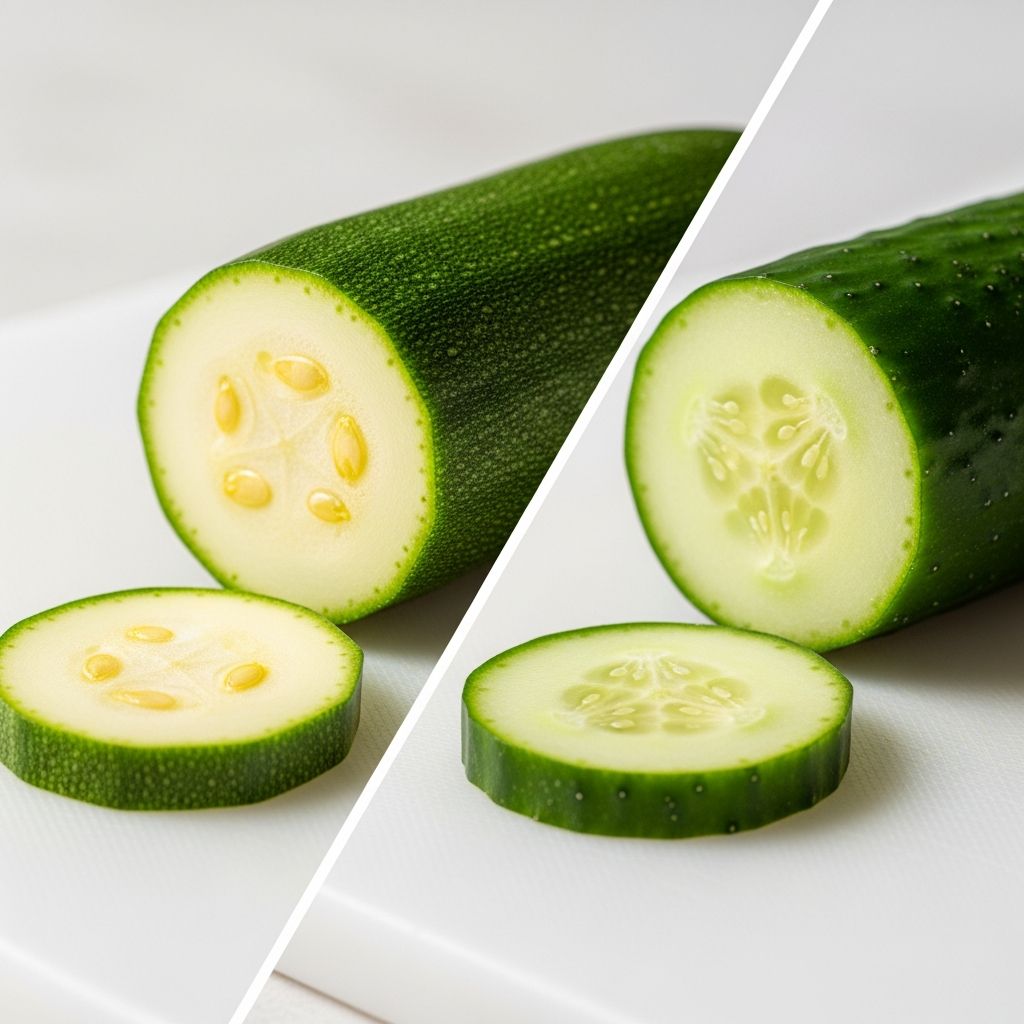
Both zucchini and cucumber are popular low-calorie vegetables from the Cucurbitaceae family, often confused due to their similar appearance, but they differ significantly in nutrition, texture, and culinary applications. Zucchini offers higher vitamin C, fiber, and protein content, while cucumber provides superior hydration and vitamin K levels.
Nutrition Comparison
Zucchini and cucumber share high water content (around 95%), making them excellent for hydration and weight management, but zucchini is denser in most nutrients per serving. A standard serving of cucumber is half a cup sliced (52g), while zucchini is one cup chopped (124g).
Calories and Macronutrients
Both are very low in calories: 100g cucumber (with peel) has 15 calories (peeled: 10), and zucchini has 17. Zucchini contains nearly twice the protein and fats, though both remain minimal, covering just 3% of daily fat needs with no cholesterol or trans fats.
| Nutrient (per 100g) | Zucchini | Cucumber (with peel) |
|---|---|---|
| Calories | 17 | 15 |
| Protein | 1.2g | 0.7g |
| Fats | 0.3g | 0.1g |
| Carbs | 3.1g | 3.6g |
Zucchini has twice the dietary fiber, aiding digestion, while cucumber has 1.5 times more net carbs.
Vitamins
Zucchini dominates in vitamins: 6.4 times more vitamin C, 4 times more E and B6, 3.4 times more folate (B9), and nearly 3 times more B3. Cucumber leads with 3.8 times more vitamin K and slightly more B5. Neither has vitamin D or B12.
- Vitamin C: Zucchini excels, supporting immunity.
- Vitamin K: Cucumber’s strength for bone health.
Minerals
Zucchini is richer in iron, potassium, magnesium, copper, zinc, and phosphorus. Cucumber has 1.5 times more selenium and 4 times less sodium, with both equal in calcium. A serving covers under 7% of daily mineral needs.
Health Benefits
Weight Loss and Low-Calorie Diets
Ideal for weight loss due to high water and fiber (zucchini) content, low calories, and satiety. Suitable for DASH diet to manage hypertension.
Diabetes Management
Cucumber shows anti-diabetic effects, lowering blood sugar and protecting liver/pancreas. Zucchini improves insulin sensitivity and glucose tolerance for type 2 diabetes.
Cancer Prevention
Both have anticancer properties. Cucumber’s cucurbitacins target lung, pancreatic, colon, breast, liver, and cervical cancers. Zucchini’s cytotoxic and antioxidant effects aid prevention and treatment.
Other Benefits
- Hydration: Cucumber’s edge in water content.
- Heart Health: Potassium in zucchini reduces blood pressure.
- Digestion: Zucchini’s fiber promotes gut health.
Culinary Uses and Differences
Though both are fruits botanically, treated as vegetables. Zucchini (firmer, mild nutty flavor) is cooked—grilled, sautéed, baked, or spiralized into noodles. Cucumber (crisp, watery) is eaten raw in salads, pickles, or infused water.
- Zucchini: Versatile in stir-fries, breads, ratatouille.
- Cucumber: Salads, tzatziki, smoothies.
How to Choose and Store
Select firm, unblemished produce. Zucchini: 6-8 inches, smooth skin. Cucumber: Firm, no yellowing. Store in fridge crisper: zucchini up to 1 week, cucumber 1-2 weeks wrapped to prevent moisture loss.
Potential Risks and Considerations
Both safe; rare allergies. High water content may cause bloating if overconsumed. Pesticide residues possible—wash thoroughly. Cucumber’s cucurbitacins in excess can be bitter/toxic, but rare in cultivated varieties.
Related Stories



Which Is Healthier?
No clear winner—depends on needs. Choose zucchini for fiber, vitamins C/E/B, minerals. Opt for cucumber for hydration, vitamin K, low sodium. Incorporate both for balanced nutrition.
Frequently Asked Questions (FAQs)
Are zucchini and cucumber the same?
No. Both Cucurbitaceae family, but zucchini (summer squash) is cooked; cucumber eaten raw with milder flavor.
Which has more water: zucchini or cucumber?
Cucumber has slightly more water (96% vs. 95%), better for hydration.
Is zucchini better than cucumber for weight loss?
Zucchini’s higher fiber promotes fullness, but both ultra-low calorie.
Can you eat zucchini raw?
Yes, but cooking improves digestibility and reduces bitterness.
Which has more vitamin C?
Zucchini: 6.4 times more than cucumber.
Are they good for diabetes?
Yes—cucumber lowers blood sugar; zucchini boosts insulin sensitivity.
Article word count: 1678 (excluding HTML tags, metadata).
References
- Zucchini vs. Cucumber — Health Impact and Nutrition Comparison — FoodStruct. 2024. https://foodstruct.com/compare/zucchini-vs-cucumber
- Zucchini vs. Cucumber Vitamins, Water Content, and Uses — HowStuffWorks. 2024. https://recipes.howstuffworks.com/zucchini-vs-cucumber.htm
- Zucchini vs Cucumber: Which One Has More Fiber and Water Content? — UConn Today. 2025-08-18. https://today.uconn.edu/2025/08/zucchini-vs-cucumber-which-one-has-more-fiber-and-water-content/
Similar Articles








Read full bio of Sneha Tete