Basal Cell Carcinoma: Complete Guide To Symptoms & Treatment
The most common skin cancer: Learn about causes, symptoms, diagnosis, effective treatments, and essential prevention strategies.
Authoritative facts about
basal cell carcinoma
(BCC): what it is, signs and symptoms, causes and images, diagnosis and treatment.What is basal cell carcinoma?
Basal cell carcinoma is the most common form of skin cancer worldwide, accounting for the majority of non-melanoma skin cancers. It arises from basal cells in the lowest layer of the epidermis, the skin’s outermost layer. BCC grows slowly and rarely metastasizes, but if untreated, it can invade nearby tissues like bone or cartilage, causing significant local damage.
Unlike more aggressive cancers, BCC is highly curable, especially when detected early, with cure rates exceeding 95% using appropriate treatments. It primarily affects fair-skinned individuals but can occur in anyone with sufficient ultraviolet (UV) exposure.
Who gets basal cell carcinoma?
BCC most commonly affects adults over 40, with incidence increasing with age. Risk is higher in men due to historical outdoor work patterns, though rates are rising in women. Fair-skinned people with light hair and eyes (Fitzpatrick skin types I-II) are most susceptible.
- Key risk groups: Those with a history of significant sun exposure, such as outdoor workers, sunbathers, or residents of sunny regions.
- Individuals with previous skin cancer or precancerous lesions like actinic keratoses.
- People with genetic conditions such as basal cell nevus syndrome (Gorlin syndrome), which predisposes to multiple BCCs at young ages.
- Immunosuppressed patients, including organ transplant recipients on long-term medications.
What causes basal cell carcinoma?
The primary cause of BCC is cumulative UV radiation exposure from sunlight or tanning beds. Intermittent intense exposure, like sunburns, is particularly risky for BCC development on the trunk, while chronic exposure affects the head and neck.
Other contributing factors include:
- Genetic mutations: UV light induces DNA damage in PTCH1 or SMO genes, key regulators in the hedgehog signaling pathway.
- Arsenic exposure: From contaminated water or historical pesticides.
- Radiation therapy: Prior treatments for other cancers increase risk.
- Xeroderma pigmentosum: A rare genetic disorder impairing DNA repair after UV damage.
Recent studies emphasize that even indoor tanning before age 35 triples skin cancer risk, underscoring the need to avoid artificial UV sources.
What does basal cell carcinoma look like?
BCC lesions vary but commonly appear on sun-exposed areas: face (especially nose, eyelids), ears, scalp, neck, shoulders, and back. Early detection relies on recognizing subtle changes.
| Common BCC Types | Description | Typical Location |
|---|---|---|
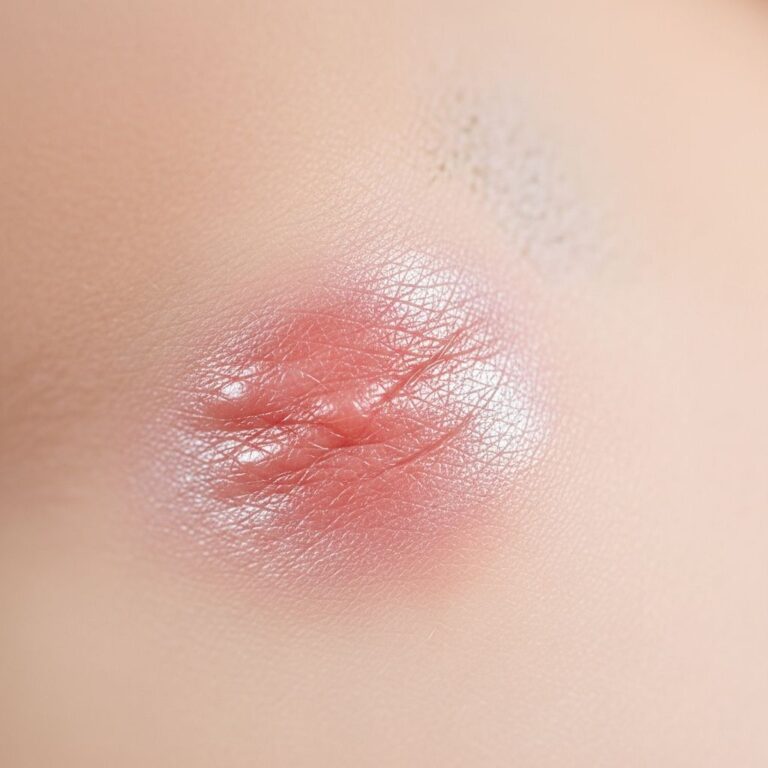
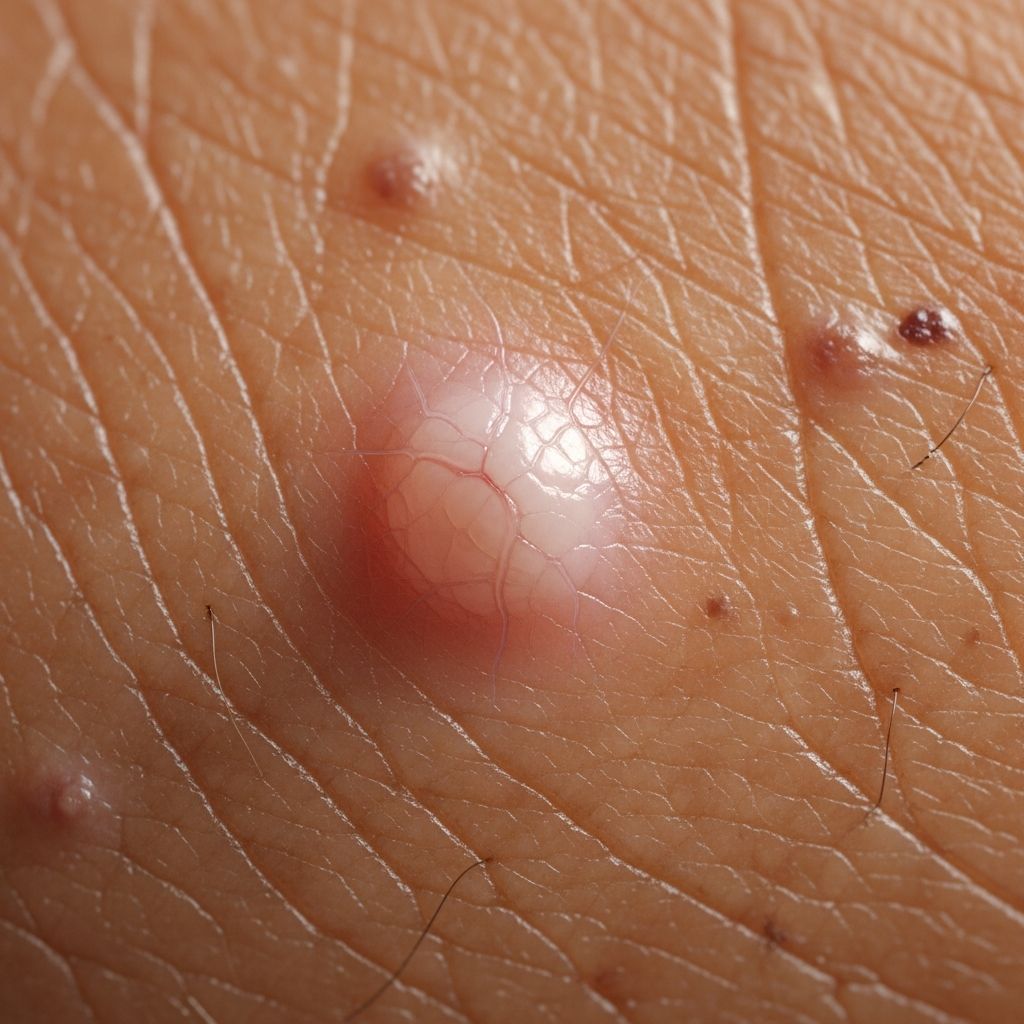
| Nodular BCC (most common, 60-80%) | Pearly or waxy bump with translucent borders, visible telangiectasia (tiny blood vessels), may ulcerate centrally (rodent ulcer). | Face, ears |
| Superficial BCC | Red, scaly, itchy patch resembling eczema or psoriasis; thin and multifocal. | Trunk, limbs |
| Morpheaform/Infiltrative BCC | Flat, scar-like, ivory-white plaque with ill-defined borders; aggressive and fibrotic. | Face (upper lip, temple) |
| Pigmented BCC | Dark brown/black spots within a pearly nodule; mimics melanoma. | Face |
Additional signs: persistent non-healing sores, bleeding/crusting bumps, pink growths with rolled edges. Lesions evolve slowly over months to years.
How is basal cell carcinoma diagnosed?
Diagnosis begins with a full skin examination by a dermatologist, using dermoscopy to assess asymmetry, borders, color, diameter, and evolution (ABCDE rule adapted for BCC).
The gold standard is a skin biopsy: a small sample is excised under local anesthesia and examined microscopically. This confirms BCC, subtypes it (nodular, superficial, etc.), and assesses risk (low vs. high based on size >2cm, location, invasion).
- Shave biopsy: For superficial lesions.
- Punch/incisional biopsy: For deeper or suspicious areas.
- Additional tests: Rarely, imaging (CT/MRI) for advanced cases suspecting deep invasion.
Biopsy results guide treatment; high-risk features include perineural invasion or morpheaform subtype.
Treatment of basal cell carcinoma
Treatment choice depends on tumor size, location, subtype, patient health, and cosmetic concerns. Surgery offers the highest cure rates (95-99%).
Surgical treatments
- Excision: Removes lesion plus 4mm margin; suitable for low-risk BCC. Cure rate ~95%; sutures needed.
- Mohs micrographic surgery: Gold standard for high-risk (face, recurrent, large >2cm). Layer-by-layer removal with immediate microscopic exam; 98-99% cure rate, tissue-sparing.
Non-surgical treatments
For small, superficial, or inoperable cases:
- Curettage & electrodessication (ED&C): Scraping and cauterizing; for low-risk on trunk. Cure rate 90-95%.
- Cryotherapy: Liquid nitrogen freezing; blisters form post-treatment. For small superficial BCC.
- Topical therapies: Imiquimod (immune modulator) or 5-FU cream for superficial BCC; applied 5-6 weeks, causes inflammation.
- Photodynamic therapy (PDT): Photosensitizer + light activates to destroy cells; office-based.
- Radiation therapy: For elderly/inoperable; fractionated doses over weeks.
Advanced/metastatic BCC (rare): Hedgehog inhibitors (vismodegib, sonidegib) or immunotherapy (cemiplimab).
Follow-up and outcomes
Post-treatment, patients need lifelong skin checks every 6-12 months due to 30-50% recurrence risk in new sites. Side effects vary: scarring from surgery, redness from topicals.
Complications of basal cell carcinoma
Untreated BCC enlarges slowly, ulcerates (rodent ulcer), erodes tissue, causing pain, bleeding, infection. Rare metastasis (<0.1%), but local invasion can disfigure (e.g., orbital). High-risk subtypes like infiltrative pose greater morbidity.
Prevention of basal cell carcinoma
Primary prevention targets UV exposure:
- Sun protection: SPF 30+ broad-spectrum sunscreen daily, reapply every 2 hours; UPF 50+ clothing, hats, sunglasses.
- Avoid 10am-4pm sun; no tanning beds.
- Self-exams: Monthly ABCDE checks; photograph changes.
- Annual dermatologist skin exams, especially high-risk groups.
Frequently Asked Questions
What are the first signs of basal cell carcinoma?
Early signs include a pearly bump, non-healing sore, red itchy patch, or scar-like area, often on sun-exposed skin.
Does basal cell carcinoma hurt or itch?
Often asymptomatic, but may itch, bleed, or cause pain/numbness as it grows or ulcerates.
Is basal cell carcinoma curable?
Yes, over 95% curable with early treatment; even advanced cases respond well.
How quickly does basal cell carcinoma grow?
Slowly, over months to years, but aggressive subtypes grow faster.
Can basal cell carcinoma spread?
Rarely metastasizes (<0.1%), but invades locally if ignored.
References
- Basal Cell Carcinoma: Symptoms and Treatment — Advanced Dermatology. 2023. https://www.advanceddermnco.com/conditions/basal-cell-carcinoma
- Basal Cell Carcinoma Basics, From Diagnosis to Treatment — CURE. 2023. https://www.curetoday.com/view/basal-cell-carcinoma-basics-from-diagnosis-to-treatment
- Basal cell carcinoma – Symptoms & causes — Mayo Clinic. 2024-01-25. https://www.mayoclinic.org/diseases-conditions/basal-cell-carcinoma/symptoms-causes/syc-20354187
- Basal cell carcinoma: From symptoms to treatments — American Academy of Dermatology (AAD). 2024. https://www.aad.org/public/diseases/skin-cancer/basal-cell-carcinoma
- Basal Cell Carcinoma: What it is, Symptoms & Treatment — Cleveland Clinic. 2023-11-01. https://my.clevelandclinic.org/health/diseases/4581-basal-cell-carcinoma
- Basal cell carcinoma – Diagnosis & treatment — Mayo Clinic. 2024-01-25. https://www.mayoclinic.org/diseases-conditions/basal-cell-carcinoma/diagnosis-treatment/drc-20354193
Similar Articles








Read full bio of Sneha Tete