Skin Grafting: Expert Guide On Procedure, Types & Aftercare
Comprehensive guide to skin grafting procedures, types, preparation, aftercare, and complications for optimal wound healing.
A
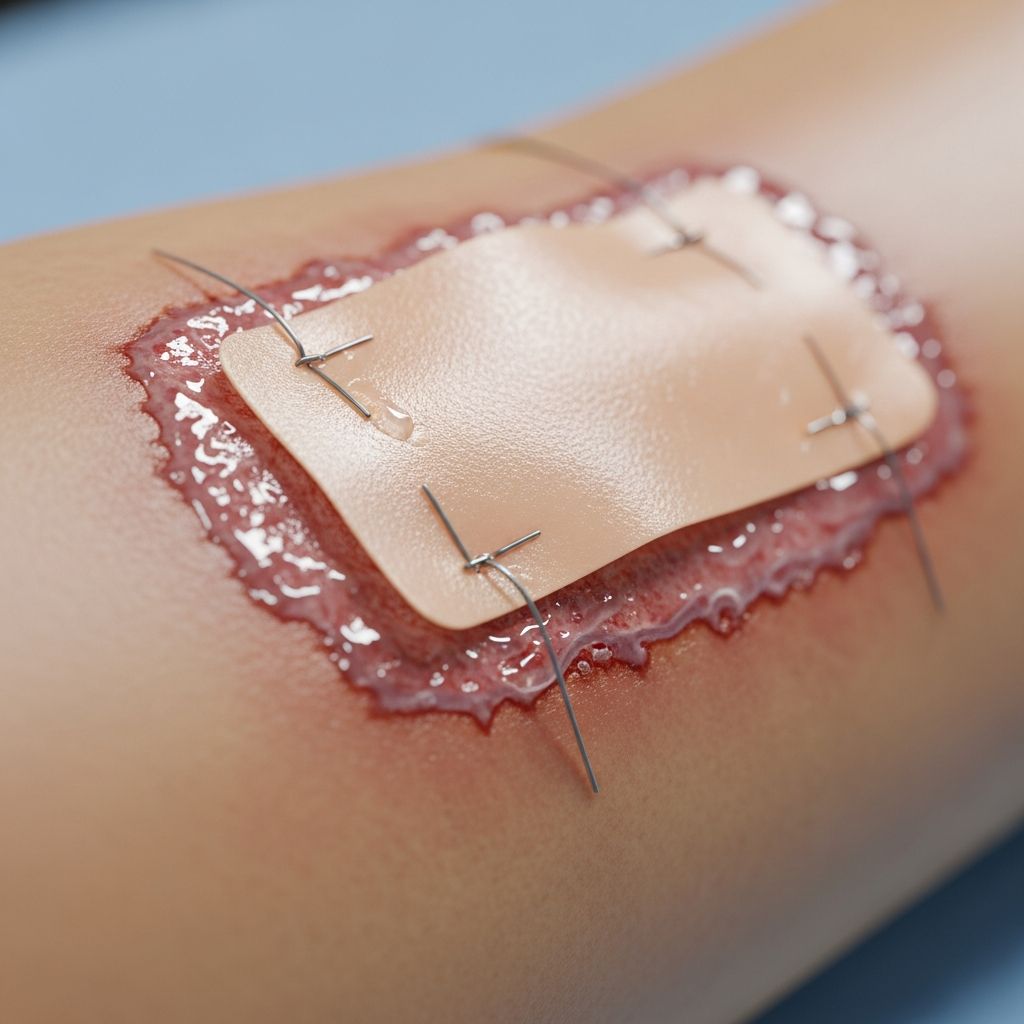
skin graft
involves transplanting healthy skin from a donor site on the patient’s body to a recipient site where skin is missing or damaged due to surgery, trauma, burns, or chronic wounds. This technique is essential when the skin defect is too large to close with primary sutures alone, promoting faster healing and reducing infection risk.What is skin grafting?
Skin grafting is a reconstructive surgical procedure where a piece of skin is removed from one area (donor site) and placed over a wound or defect (recipient site). It is commonly used after excision of skin cancers, deep burns, or large traumatic wounds where natural healing would be slow or result in poor functional and cosmetic outcomes. The graft ‘takes’ by developing new blood vessels from the underlying wound bed, a process called revascularization, typically within 5-7 days.
Superficial wounds heal by reepithelialization from remaining epidermal cells, but full-thickness skin losses require grafting to restore barrier function, prevent fluid loss, and enable proper healing. Grafts can be autologous (patient’s own skin), allogeneic (donor skin, temporary), or bioengineered substitutes.
Who needs a skin graft?
Patients requiring skin grafts typically have:
- Full-thickness skin defects from skin cancer excision (e.g., melanoma, squamous cell carcinoma).
- Burns covering large areas.
- Traumatic wounds, such as degloving injuries or avulsions.
- Chronic ulcers (e.g., diabetic foot ulcers, venous leg ulcers) unresponsive to conservative treatment.
- Surgical defects from flap failures or infections.
Grafting is indicated when the wound bed is clean, vascularized, and free of infection to maximize ‘take’ rates, which can exceed 90% under optimal conditions.
Types of skin grafts
Skin grafts are classified by thickness and source. The primary types are split-thickness skin grafts (STSG) and full-thickness skin grafts (FTSG).
Split-thickness skin grafts (STSG)
STSGs include the epidermis and a variable portion of the dermis (typically 0.015-0.030 inches thick), harvested using a dermatome. They are ideal for large defects due to easy availability from sites like the thigh or abdomen.
- Advantages: Cover larger areas; donor sites heal by reepithelialization in 7-14 days; can be meshed to expand coverage up to 1.5-9 times.
- Disadvantages: Higher contraction (up to 20-50%); poorer cosmesis with color mismatch and thin texture; more prone to trauma.
Meshing involves perforating the graft to allow drainage, expansion, and better contouring, creating a ‘meshed’ appearance that epithelializes over time.
Full-thickness skin grafts (FTSG)
FTSGs harvest the entire epidermis and dermis down to subcutaneous fat using a scalpel. Used for smaller, cosmetically sensitive areas like the face or hands.
- Advantages: Excellent cosmesis; minimal contraction (<10%); durable with adnexal structures (hair follicles, sweat glands).
- Disadvantages: Limited donor sites (post-auricular, groin, supraclavicular); donor site requires primary closure; lower initial take rate (70-90%) due to thickness.
Donor sites for FTSGs heal faster (5-7 days) via sutures, leaving a linear scar.
Other types
- Composite grafts: Include cartilage or other tissues for nasal/ear reconstruction.
- Micrografts (e.g., MEEK): Expand small donor skin up to 9x for burns, reducing donor morbidity.
- Bioengineered skin grafts (BSGs): Acellular matrices or cellular constructs (e.g., keratinocytes, fibroblasts) with growth factors like VEGF/PDGF for poor vascular beds (bone, tendon). Used as temporizing measures before autologous grafting; comparable long-term outcomes to ASGs with less donor site pain.
Related Stories



Preparation for skin grafting
Preoperative preparation ensures success:
- Wound bed optimization: Debridement to remove necrotic tissue; antibiotics if infected; ensure vascularity.
- Patient assessment: Optimize nutrition (protein, vitamins A/C), smoking cessation (impairs revascularization), control diabetes.
- Consent and counseling: Discuss graft take risks (failure 5-30%), donor site pain, scarring, and need for immobilization.
- Donor site selection: Match color/thickness (e.g., thigh for trunk, post-auricular for face); avoid sun-exposed areas for cosmesis.
Tissue expanders may be used preoperatively to generate more donor skin via serial saline injections.
Skin graft surgery procedure
Performed under local/general anesthesia in stages:
- Recipient site preparation: Excise lesion with margins; hemostasis; template wound for graft sizing.
- Donor harvest: STSG via powered/handheld dermatome; FTSG via scalpel excision.
- Graft processing: Defatting for FTSG; meshing for STSG if needed.
- Graft application: Lay graft epidermal-side up; secure with sutures/staples; bolster dressing (tied sutures over spongy material) or negative pressure therapy to prevent shear/fluid accumulation.
- Donor closure: STSG reepithelializes under dressings; FTSG sutured.
Surgery duration: 30-90 minutes; outpatient for small grafts.
Aftercare following skin grafting
Grafts are fragile for 5-7 days until neovascularization. Key instructions:
- Immobilization: Elevate limb; avoid movement to prevent shear.
- Dressings: Bolster unchanged for 5-7 days; monitor for hematoma/seroma.
- Pain management: Donor sites hurt more initially (paracetamol/opioids); grafts numb initially.
- Wound care: After bolster removal, apply petroleum/moisturizers; sun protection (SPF 50+) for 1-2 years.
- Follow-up: Day 5-7 for inspection; 2-4 weeks for sutures; 3-6 months for scarring assessment.
Healing timeline: Graft take 5-7 days; donor STSG 2 weeks, FTSG 5-7 days; maturation 1-2 years.
What are the complications of skin grafts?
| Complication | Description | Prevention/Treatment |
|---|---|---|
| Hematoma/Seroma | Fluid collection under graft causing failure (most common). | Pressure dressings, drainage; evacuate if present. |
| Infection | Bacterial (Pseudomonas/Staph); presents with pus/fever. | Prophylactic antibiotics; debride/culture. |
| Poor take/Failure | Partial/total loss (smoking, poor bed, shear). | Optimize bed; re-graft if needed. |
| Contracture | Shrinkage, especially STSG; joint issues. | |
| Hyperpigmentation/Hypopigmentation | Color mismatch. | Camouflage, lasers; time (1-2 years). |
| Keloid/Hypertrophic scar | Abnormal healing. | Steroids, silicone sheets. |
Overall complication rate: 10-20%; higher in burns/compromised patients.
Scar appearance after skin grafting
Scars evolve: pink/red initially (vascularization), flatten over 12-18 months. STSG: shiny, patchy pigmentation, meshed pattern. FTSG: near-normal texture/color match. Factors: graft thickness, site, patient age/ethnicity (darker skin higher keloid risk). Treatments: massage, silicone, lasers (pulsed-dye for redness, fractional for texture).
Bioengineered skin substitutes
For challenging beds, dermal substitutes (e.g., Integra: collagen-chondroitin matrix) provide scaffold for neodermis formation, followed by STSG. Cultured epithelial autografts (CEA) grow keratinocytes from biopsy. Advantages: no/large donor needs; bioactive augmentation. Limitations: cost ($1000s), infection risk, variable integration.
Frequently Asked Questions
Will my skin graft match my skin colour?
Not perfectly; STSG often hypopigments, FTSG better matches. Improves over 1-2 years with sun protection.
How long will it take for the graft to heal?
Graft adherence: 5-7 days; donor STSG: 2 weeks; full maturation: 1-2 years.
Will I have pain after the surgery?
Yes, donor sites burn initially; grafts less painful. Managed with analgesics.
Can I shower after skin grafting?
After bolster removal (day 5-7), gentle showers; keep dry initially.
What restrictions are there after skin grafting?
No strenuous activity 2-4 weeks; elevate limb; no smoking.
References
- Skin Grafting — DermNet NZ. 2023-05-15. https://dermnetnz.org/topics/skin-grafting
- Skin Grafts, Split-Thickness and Full-Thickness — WoundSource. 2024-08-20. https://www.woundsource.com/patientcondition/skin-grafts
- Advancements in bioengineered and autologous skin grafting — National Library of Medicine, NIH. 2024-10-01. https://pmc.ncbi.nlm.nih.gov/articles/PMC11747595/
- Bioengineered skin — DermNet NZ. 2023-07-10. https://dermnetnz.org/topics/bioengineered-skin
Similar Articles








Read full bio of medha deb