Trichilemmal Cyst: 6 Facts On Causes, Symptoms & Treatment
Comprehensive guide to trichilemmal cysts: causes, symptoms, diagnosis, treatment, and management of these common scalp nodules.
Authoritative facts about trichilemmal cysts (pilar cysts, wen): what they are, symptoms, causes, how they are diagnosed, treated and prevented.
Introduction
A
trichilemmal cyst
, also known as apilar cyst
orwen
, is a common benign cyst filled with keratin, the hard protein found in hair and nails. These cysts arise from the outer root sheath of hair follicles, specifically the trichilemmal portion. They predominantly affect the scalp, occurring in up to 90% of cases, though they can appear on the face, neck, trunk, or rarely the scrotum. Trichilemmal cysts are typically diagnosed in middle-aged adults, particularly females, and often exhibit a familial pattern with autosomal dominant inheritance, meaning a 50% chance of passing the trait to offspring if a parent is affected.Unlike infectious or inflammatory conditions, trichilemmal cysts are non-contagious and harmless unless they become inflamed or rupture. They are frequently misidentified as sebaceous cysts, but they lack a connection to sebaceous glands. Multiple cysts are common, especially in hereditary cases, and they grow slowly over time, ranging from 0.5 to 5 cm in diameter. While asymptomatic in most instances, trauma can lead to inflammation, pain, or secondary infection.
Understanding trichilemmal cysts is crucial for distinguishing them from malignant or other cystic lesions. This article details their clinical presentation, diagnostic criteria, histological features, management strategies, and rare complications, drawing from dermatological expertise to guide patients and clinicians.
Clinical features
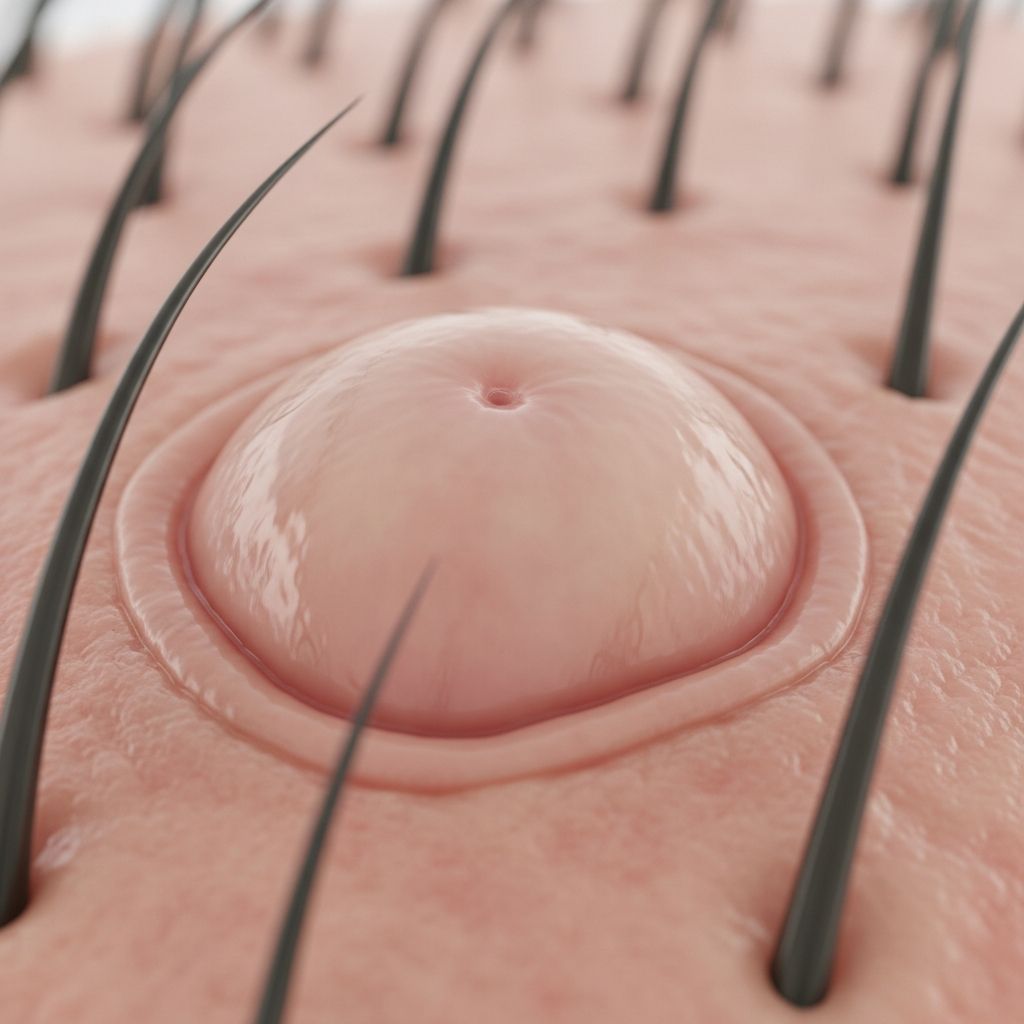
Trichilemmal cysts present as one or more
firm, mobile, subcutaneous nodules
on the scalp or other hairy areas. They feel smooth and dome-shaped, with sizes typically between0.5–5 cm
, though larger cysts up to 10 cm have been reported in proliferating variants. The overlying skin appears normal or stretched, with thinned hair due to pressure; there isno central punctum
(blackhead-like opening), a key differentiator from epidermoid cysts.- Location: Scalp (90%), face, neck, trunk, extremities, or genitals (scrotum in males).
- Appearance: Flesh-colored, round, non-tender unless inflamed.
- Symptoms: Usually asymptomatic; pain, redness, and swelling if ruptured or traumatized.
- Growth: Slow, stable; rapid growth may suggest proliferation.
- Number: Solitary or multiple (familial cases often have 10+).
Inflammation occurs when the cyst wall ruptures, releasing keratin into surrounding tissue, mimicking infection with erythema, warmth, and tenderness. This sterile inflammation resolves spontaneously but can scar if untreated. Patients may report a history of similar lesions in family members.
Difference from epidermoid cyst
Trichilemmal cysts are often confused with
epidermoid cysts
(incorrectly called sebaceous cysts), but distinct features aid differentiation. The table below summarizes key differences:| Feature | Trichilemmal Cyst | Epidermoid Cyst |
|---|---|---|
| Origin | Outer root sheath of hair follicle | Surface epidermis or follicular infundibulum |
| Location | Scalp (90%) | Anywhere on body |
| Punctum | Absent | Present (central pore) |
| Cyst wall | Thick, stratified squamous without granular layer | Thin, with granular layer |
| Contents | Dense, eosinophilic keratin (cheesy, compact) | Flaky keratin, sebaceous debris |
| Rupture risk | Low (thick wall) | High (fragile wall) |
| Inheritance | Often familial (autosomal dominant) | Not typically |
Clinically, trichilemmal cysts lack the punctum and feel firmer due to their robust wall, reducing spontaneous rupture. Histologically, the absence of a granular layer confirms trichilemmal origin.
Histological findings
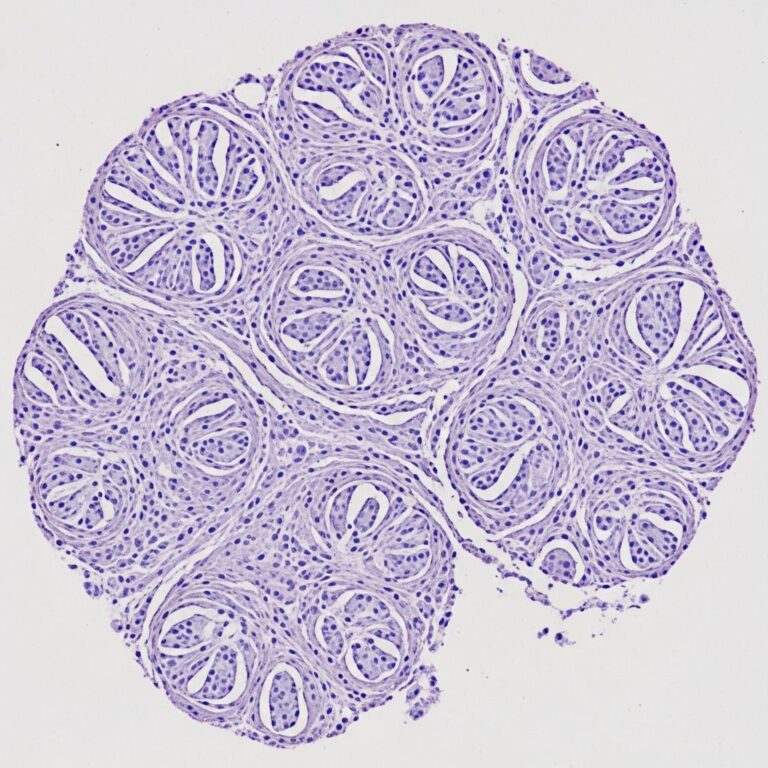
Histopathology is pathognomonic. The cyst is lined by
stratified squamous epithelium
resembling the outer root sheath, with a palisaded basal layer. Notably, there isno granular layer
, and the lumen fills withhomogeneous, dense, eosinophilic keratin
on H&E staining, lacking nuclear debris. The wall is thick, preventing easy rupture, and may show focal calcification or liquefaction in older cysts.Related Stories



- Key features: Abrupt keratinization without granular cell layer; onion-skin-like concentric lamellae.
- Proliferating variant: Increased epithelial proliferation, mitosis; rarely atypical or malignant.
- Differential: Distinguish from epidermoid cysts (granular layer present) or pilomatrixoma (ghost cells).
Biopsy is rarely needed for typical cases but confirms diagnosis if atypical features like rapid growth suggest proliferating trichilemmal tumor (PTT).
Treatment
Asymptomatic trichilemmal cysts require
no treatment
; observation suffices. Intervention is indicated for symptoms, cosmetics, or inflammation prevention.Conservative management
- Avoid trauma to prevent rupture.
- Intralesional corticosteroids (e.g., triamcinolone 0.1–1 mg) for inflamed cysts to reduce swelling.
Surgical options
Surgery is curative with low recurrence if complete excision includes the cyst wall. Methods include:
- Excision without rupture: Elliptical incision, intact removal to minimize scarring.
- Punch excision: Small punch biopsy tool to express contents and extract wall; ideal for scalp.
- Incision and drainage (I&D): For acute inflammation; follow with excision once resolved.
Post-rupture inflammation is sterile; antibiotics only if infected (culture-guided). Proliferating or malignant variants may require wide excision, Mohs surgery, radiation, or chemotherapy.
Proliferating trichilemmal cysts and malignancy
Rarely (3% of cases), trichilemmal cysts evolve into
proliferating trichilemmal tumors (PTT)
, characterized by rapid growth, ulceration, and size >5 cm. Most are benign, butmalignant PTT (mPTT)
occurs in <1%, showing atypia, infiltration, and metastasis potential (local aggression common).- Risk factors: Longstanding cysts, prior trauma, genetic predisposition.
- Management: Complete excision with margins; histopathology essential. Adjuvant therapy for mPTT.
- Prognosis: Excellent for benign; guarded for malignant (recurrence 10–30%).
Suspect if rapid growth, pain, bleeding; urgent biopsy recommended.
Frequently asked questions (FAQs) about trichilemmal cysts
Q: Are trichilemmal cysts cancerous?
A: No, most are benign. Rarely (<3%), they proliferate; malignant change is exceptional and requires excision.
Q: Do trichilemmal cysts go away on their own?
A: They do not resolve spontaneously but may shrink if ruptured. Surgery prevents recurrence.
Q: Can I pop a pilar cyst at home?
A: No, this risks infection, scarring, and inflammation. Seek professional removal.
Q: How do you prevent trichilemmal cysts?
A: Avoidance of trauma; genetic counseling for familial cases. No proven prevention.
Q: What happens if a trichilemmal cyst gets infected?
A: Treat with I&D, culture, and antibiotics if bacterial. Excise post-resolution.
Q: Are pilar cysts hereditary?
A: Yes, autosomal dominant inheritance in many cases.
References
- What is a trichilemmal cyst? — KMC Dermatology. 2023. https://www.kmcpa.com/post/what-is-a-trichilemmal-cyst
- Trichilemmal cyst — DermNet NZ. 2024-01-15. https://dermnetnz.org/topics/trichilemmal-cyst
- Pilar cysts (trichilemmal cyst) — Dermatology Advisor. 2023-05-20. https://www.dermatologyadvisor.com/home/decision-support-in-medicine/dermatology/pilar-cysts-trichilemmal-cyst-tricholemmal-cyst-wen/
- Pilar cyst: Causes, treatment, and removal — Medical News Today. 2023-11-10. https://www.medicalnewstoday.com/articles/321405
- Pilar Cyst — MD Searchlight. 2024. https://mdsearchlight.com/skin-problems-and-treatments/pilar-cyst/
- Pilar Cyst — StatPearls, NCBI Bookshelf (NIH). 2023-07-17. https://www.ncbi.nlm.nih.gov/books/NBK534209/
Similar Articles








Read full bio of medha deb