Wound Closure Techniques: Methods and Best Practices
Master wound closure methods: primary, secondary, and tertiary intention healing techniques.
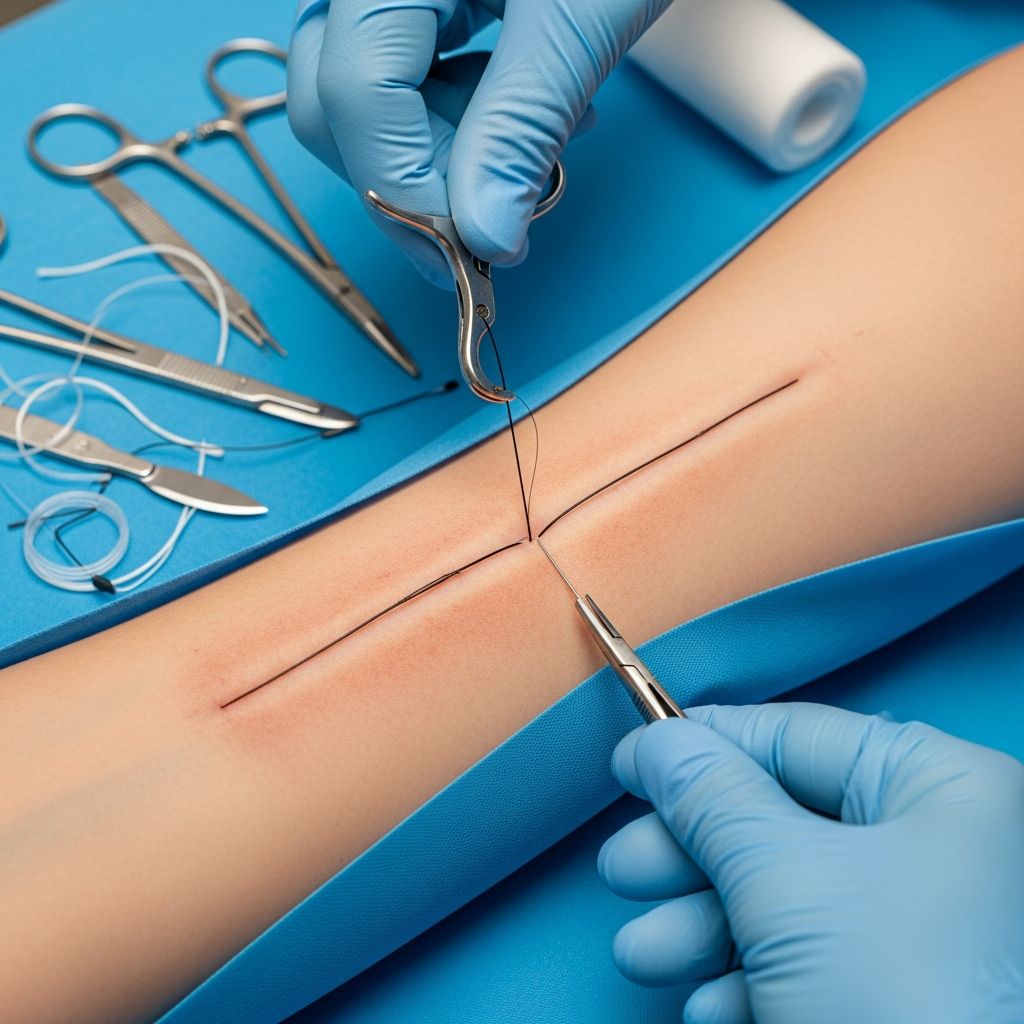
Wound Closure Techniques
Wound closure is a fundamental aspect of surgical and medical care that directly influences healing outcomes, infection risk, and cosmetic results. The technique chosen for closing a wound depends on multiple factors including wound classification, tissue loss, contamination level, and patient health status. Understanding the different wound closure methods and their applications is essential for healthcare professionals to achieve optimal patient outcomes.
Understanding Wound Healing Phases
Before implementing any wound closure technique, it is crucial to understand the phases of wound healing. The wound healing process occurs in four distinct stages that influence closure decisions:
- Hemostasis: The immediate phase where bleeding is controlled through clot formation, typically lasting minutes to hours after injury.
- Inflammatory Phase: Beginning immediately after injury and lasting several days, this phase involves immune response and removal of debris.
- Proliferative Phase: Lasting from days 3-21, this phase involves granulation tissue formation, collagen deposition, and wound contraction.
- Maturation Phase: The remodeling phase that can last months to years, where collagen reorganizes and wound strength increases.
Pre-Closure Wound Assessment
A comprehensive assessment is essential before closing any wound. Healthcare providers must evaluate several critical factors:
- Wound Size and Depth: Determine the extent of tissue damage and appropriate closure technique required.
- Contamination Status: Examine for foreign objects, debris, and microbial contamination to reduce infection risk.
- Tissue Viability: Assess for necrotic tissue that requires debridement before closure.
- Hemostasis Management: Ensure bleeding is controlled using direct pressure, hemostatic agents, or cautery to establish a stable environment for wound closure.
- Wound Edges: Evaluate whether edges can be approximated without excessive tension.
Primary Intention Closure
Primary intention (also called primary union) is the most desirable wound closure method when conditions permit. This technique involves bringing wound edges together and maintaining apposition through sutures, staples, adhesive strips, or surgical glue. Primary intention healing results in lower infection rates, minimal scarring, and faster wound healing compared to other closure methods.
Ideal Candidates for Primary Closure
Wounds suitable for primary intention closure meet specific criteria:
- Classified as clean (Class I) or clean-contaminated (Class II) wounds
- Can be closed within four to eight hours from injury
- Sustain minimal tissue loss and can be closed without tension
- Show no signs of infection or significant inflammation
- Have smooth, approximable edges with minimal foreign body presence
Primary Closure Techniques
Several methods can achieve primary wound closure:
- Sutures: Most versatile option allowing precise tissue approximation with absorbable or non-absorbable materials
- Staples: Rapid closure method ideal for scalp, trunk, and extremity wounds
- Adhesive Strips: Suitable for low-tension wounds and areas requiring minimal scarring
- Surgical Glue: Tissue adhesives offering excellent cosmetic outcomes particularly beneficial for facial injuries requiring minimal scarring
Undermining wound edges—freeing tissue at the deep dermis and subcutaneous layers—may be necessary to reduce tension and facilitate edge approximation. This technique allows the surgeon to bring wound edges together without excessive pulling, reducing the risk of dehiscence and improving cosmetic outcomes.
Related Stories



Secondary Intention Closure
Secondary intention healing occurs when wounds are left open to heal naturally through granulation tissue formation and epithelialization. This method is chosen when wound edges cannot be safely approximated or significant tissue loss is present.
When Secondary Intention Is Appropriate
Secondary closure is indicated for wounds with the following characteristics:
- Large amounts of skin or tissue loss making edge approximation impossible
- Contaminated or dirty-infected wound status
- Delayed clinical consultation increasing infection risk
- Risk of excessive tension if closed surgically
- High risk for post-procedure infection
Examples include severe lacerations, traumatic injuries, and extensive burns or chronic ulcers.
Secondary Healing Process
Secondary intention healing is a lengthy process involving several stages:
- Granulation tissue gradually fills the wound defect
- Wound contraction occurs as myofibroblasts pull edges inward
- Epithelialization proceeds from wound margins inward
- Scar tissue formation completes the healing process
This method places patients at increased infection risk due to prolonged lack of epidermal barrier and may result in slower healing and more prominent scarring. Advanced techniques such as wound vacuum-assisted closure (VAC) can promote faster healing through negative pressure therapy, while dermal and epidermal grafting are used for extensive tissue loss.
Tertiary Intention Closure
Tertiary intention, also known as delayed primary intention, involves intentionally delaying wound closure to allow infection or inflammation to subside. The wound is left open while deep tissue layers are closed, with superficial layers closed later after risk reduction.
Tertiary Closure Procedure
The tertiary closure process typically follows this sequence:
- Initial closure of subcutaneous and fascial layers
- Superficial wound layers left open with dressing coverage
- Infection and inflammation allowed to resolve for 5-7 days
- Secondary closure with sutures or staples once infection risk significantly decreases
This approach combines benefits of both primary and secondary healing while reducing infection risk and allowing proper tissue healing.
Clinical Applications
Tertiary closure is beneficial for:
- Wounds with superficial soft tissue left open to allow infection or edema clearance
- Abdominal or pelvic wounds with perforated viscera, where only fascia is initially closed to prevent evisceration
- Contaminated wounds requiring infection control before final closure
- Wounds requiring skin grafts, flaps, or skin substitutes for coverage
Wound Classification and Closure Selection
Wound classification guides appropriate closure selection:
| Wound Class | Characteristics | Recommended Closure |
|---|---|---|
| Class I – Clean | No infection signs, no internal organ entry, sterile technique maintained, elective non-traumatic procedures | Primary intention |
| Class II – Clean-Contaminated | Minor contamination present, controlled environment, gastrointestinal or biliary tract entry | Primary or delayed primary intention |
| Class III – Contaminated | Major contamination, significant time delay, traumatic wounds with major breaks in sterile technique | Secondary or tertiary intention |
| Class IV – Dirty-Infected | Existing infection, perforated viscera, old traumatic wounds | Secondary intention |
Specialty-Specific Closure Considerations
Different surgical specialties require tailored closure approaches based on anatomical and functional requirements:
Abdominal Surgery
Abdominal wounds demand layered closure techniques ensuring strength and reducing hernia risk. Surgeons must close each tissue layer appropriately, with fascial closure being particularly critical for maintaining abdominal wall integrity.
Orthopedic Surgery
Orthopedic procedures require strong, durable closure supporting healing in high-mobility areas. Closure techniques must maintain structural integrity and functionality of repaired tissues.
Emergency/Trauma Settings
Emergency wound closure requires rapid assessment and intervention. For lacerations, quick but thorough cleaning followed by sutures or staples is essential for deep wounds. The priority is achieving hemostasis and preventing contamination while maintaining cosmetic outcomes when possible.
Facial Injuries
Facial injuries require minimal scarring for optimal cosmetic outcomes. Tissue adhesives and fine suture materials are preferred to achieve excellent cosmetic results.
Suture Materials and Selection
Choosing appropriate suture materials is critical for wound closure success. Absorbable sutures such as REDISORB® Absorbable Coated Braided PGLA Synthetic Sutures are suitable for internal tissues where long-term suture presence is undesirable. These materials support healing and eliminate the need for suture removal, making them ideal for deep tissue approximation where suture removal is impractical.
Post-Closure Wound Care
Proper post-closure care is essential for optimal healing outcomes. After wound closure:
- Keep the wound clean and dry to promote healing
- Avoid strenuous activity that may stress the closure
- Monitor for signs of infection including increased redness, warmth, drainage, or pain
- Follow specific instructions based on closure type and suture material used
- Keep dressings appropriate to wound type and location
Healing time varies based on wound size, location, patient age, and overall health status. Complex wounds may require longer healing periods and specialized wound care interventions.
Advanced Wound Closure Technologies
Modern wound closure has evolved beyond traditional sutures and staples. Advanced techniques now include:
- Vacuum-Assisted Closure (VAC): Uses negative pressure to promote faster healing in complex wounds
- Dermal Grafting: Addresses extensive tissue loss from burns or chronic ulcers
- Epidermal Grafting: Provides epidermis coverage for large surface area wounds
- Tissue Adhesives: Offer quick closure with excellent cosmetic outcomes for appropriate wounds
- Skin Substitutes: Provide temporary or permanent coverage for extensive injuries
Frequently Asked Questions
Q: How soon after injury should a wound be closed?
A: Primary intention closure should ideally occur within 4-8 hours of injury. However, clean wounds may be closed up to 24 hours after injury if properly cleaned and managed. Timing depends on wound contamination level and risk of infection.
Q: What is the difference between absorbable and non-absorbable sutures?
A: Absorbable sutures break down naturally in tissue over time and do not require removal, making them ideal for internal tissues and areas difficult to access. Non-absorbable sutures remain indefinitely and must be removed, making them suitable for skin closure where removal is easily accomplished.
Q: When is secondary intention healing preferred over primary closure?
A: Secondary intention is preferred when wounds cannot be safely closed without tension, have significant tissue loss, are heavily contaminated, or have delayed clinical presentation. It is commonly used for chronic wounds, extensive burns, and severely traumatized tissue.
Q: What are the advantages of delayed primary closure?
A: Tertiary intention closure allows time for infection and inflammation to resolve before final closure, reducing infection risk while maintaining faster healing than complete secondary intention. This approach is particularly valuable for contaminated wounds requiring infection control.
Q: How can wound tension affect healing outcomes?
A: Excessive wound tension increases risk of dehiscence (edge separation), increases scarring, impairs blood flow to healing tissue, and may lead to complications. Techniques like undermining help reduce tension and improve healing.
Q: What signs indicate a wound closure complication?
A: Watch for increased redness, warmth, swelling, purulent drainage, foul odor, fever, wound opening (dehiscence), or unusual pain. These may indicate infection or other complications requiring immediate medical attention.
References
- Best Practices in Wound Closure Techniques for Various Specialties — MycoMedical. 2025. https://www.mycomedical.com/post/closing-the-gap-best-practices-in-wound-closure-techniques-for-various-specialties
- Surgical Wound Secondary Closure — Slocum Center. 2025. https://slocumcenter.com/treatments/surgical-wound-secondary-closure/
- How Do Surgical Wounds Close? — Sanara MedTech Inc. 2025. https://sanaramedtech.com/blog/how-do-surgical-wounds-close/
- 3 Types of Wound Closure and What They Mean — WCEI Blog. 2025. https://blog.wcei.net/3-types-of-wound-closure
- Wound Closure Techniques — StatPearls, NCBI Bookshelf, National Institutes of Health. 2024. https://www.ncbi.nlm.nih.gov/books/NBK470598/
Similar Articles








Read full bio of Sneha Tete